
Sports technology is no longer a luxury. It dictates the industry. Many observers assume that major tournaments like the World Cup are merely stages for the finest physical talents on the planet.
The reality contradicts this shallow view: it is the largest data infrastructure battleground of this century. According to official media publications by FIFA (2026), the projected digital streaming audience for this global tournament is on track to cross 4.5 billion people. Processing a data volume of this magnitude causes generic, off-the-shelf software frameworks to collapse within milliseconds. The true victors operating behind the curtain are custom system architectures engineered with extreme precision.
The public frequently misinterprets these technological advancements as mere entertainment decorations for broadcast television. In truth, it centers on data sovereignty and operational ecosystem resilience that directly orchestrates human emotion in real-time.
Demolishing the Common Misconceptions
A widespread but flawed narrative suggests that deploying artificial intelligence (AI) and field-wide sensor arrays ruins the dramatic, human essence of football. Fans routinely complain across digital feeds that automated offside determinations feel clinical and mechanical.
However, we must analyze this from the standpoint of commercial viability and compliance governance. In the modern sports arena, financial deficits resulting from human officiating errors can devastate investment portfolios valued at hundreds of millions of dollars. The reality is that semi-automated tracking engines exist not to replace human personnel, but to eradicate subjective bias that threatens structural integrity. Rejecting automated data capture today is equivalent to operating a logistics enterprise without GPS tracking—blind and entirely speculative.
Empirical Evidence of Custom Infrastructure Resilience
The operational complexity of this global tournament proves that rigid commercial software can never satisfy hyper-scale structural demands. Two primary architectural developments now serve as the new global benchmarks for the technological enterprise:
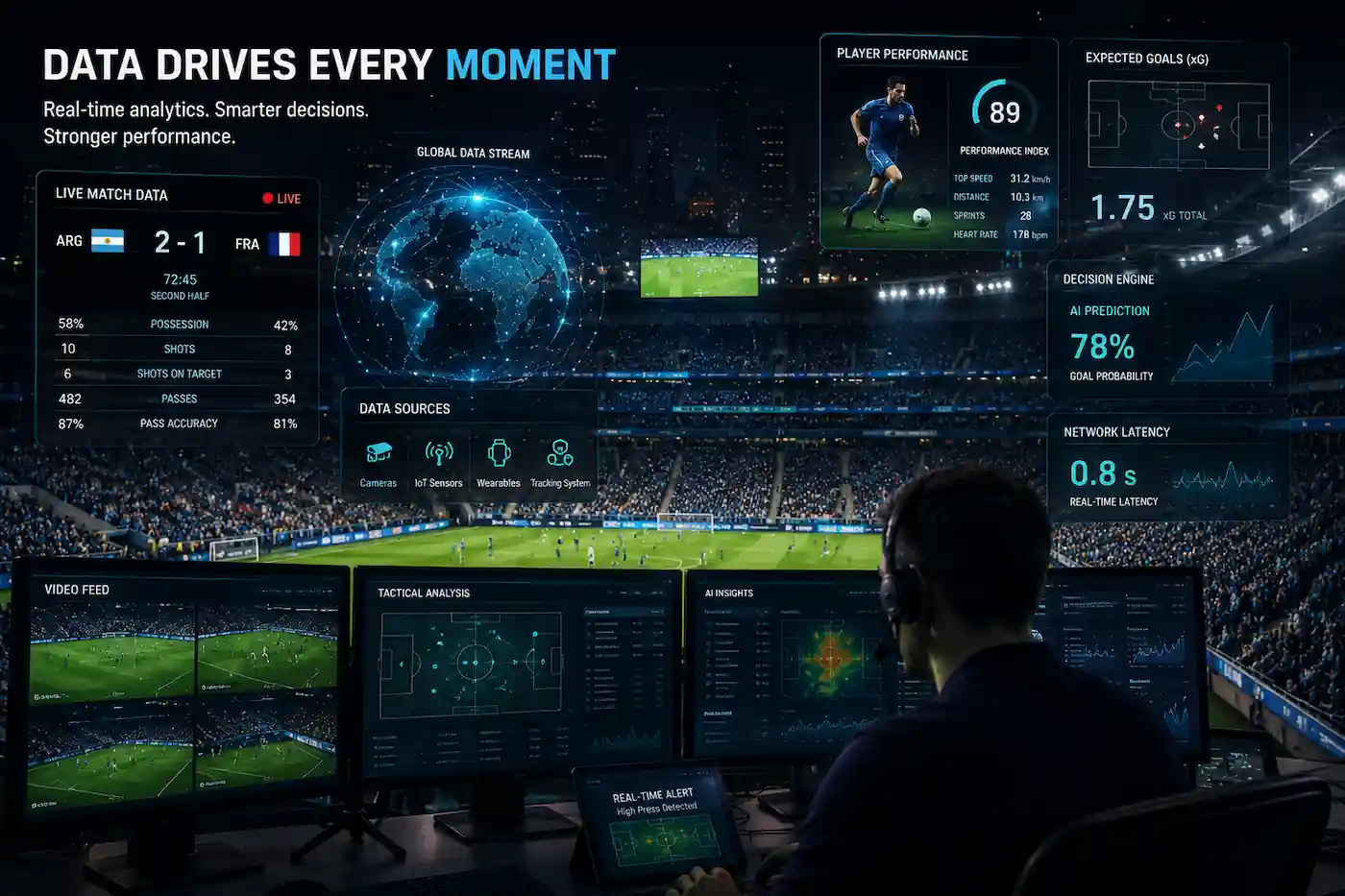
- Drastic Latency Mitigation: Technical frameworks validated by Gartner Tech (2026) dictate that contemporary digital broadcasting systems must sustain a latency baseline under 1.5 seconds for Over-The-Top (OTT) feeds. This performance is achieved by embedding customized Content Delivery Networks (CDNs) hyperlocally within regional nodes.
- Edge Computing and On-Field IoT: Every match ball and player apparel asset contains micro-telemetry tracking sensors. This raw data is processed instantaneously at the network edge using customized AI models to render automated officiating visualizations in under 0.5 seconds.
The Strategic Imperative for Domestic Industries
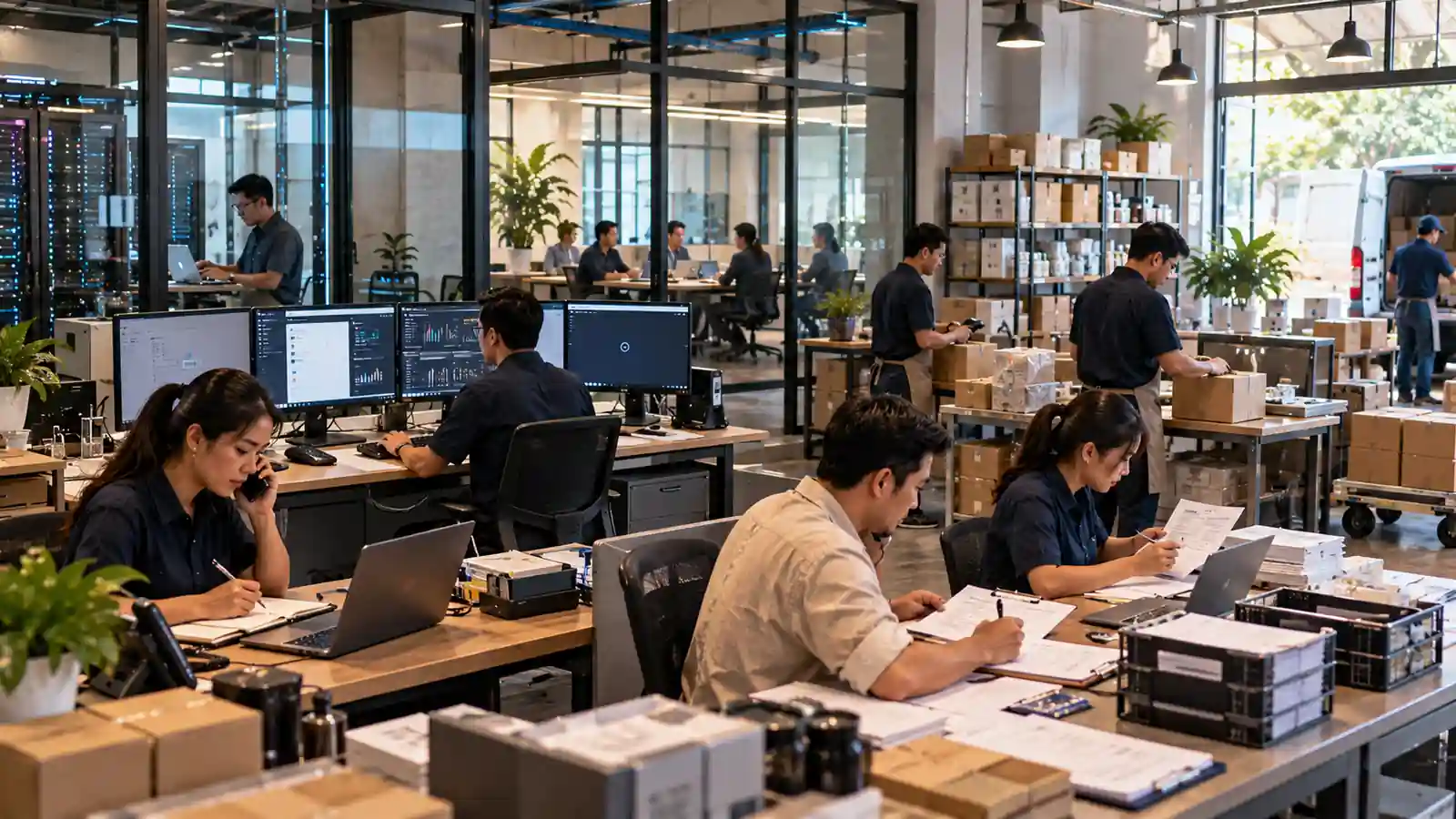
This high-performance technological landscape should serve as an aggressive wake-up call for corporate directors and startup innovators in Indonesia. Too many local enterprises remain content renting static third-party operational software, trapping themselves under per-seat licensing structures that continuously drain annual budgets.
The time has arrived to march toward digital self-reliance. Domestic industries must possess the courage to invest in engineering proprietary custom systems, independent applications, and independent database architectures. Controlling a tailored digital product means your management team exercises total authority over organizational scaling, insulates intellectual property from foreign data breaches, and pivots workflows instantly to match shifting consumer demands.
Operational Realities and Constraints
Admittedly, engineering independent software architecture is a demanding enterprise. The primary roadblock within the Indonesian landscape is not capital availability, but the shortage of technical talent committed to high-precision engineering. Numerous local software builds collapse because they are rushed into production without extensive load balancing or long-term stress simulations.
Furthermore, evolving compliance frameworks enforced by the Financial Services Authority (OJK) and national personal data protection mandates demand rigorous encryption standards. Consequently, collaborating with an established digital product studio becomes a mandatory strategic step to mitigate structural risks.
FAQ
- Why is maintaining sub-1.5-second latency non-negotiable for digital streaming platforms? High network latency damages user interaction, as match updates or crucial goals will leak on social channels before the audience witnesses the event on their stream.
- Do automated AI models eliminate the need for human officials during professional matches? AI processes spatial telemetry from tracking arrays down to millimeter-level accuracy, but the definitive operational decision rests with human referees who synthesize the data.
- How can traditional enterprise operations implement these advanced architecture lessons? By transitioning to custom cloud-native environments featuring automated auto-scaling functionalities to absorb consumer traffic spikes without relying on third-party frameworks.
Take the Correct Action Now
Digital sovereignty is the ultimate differentiator to dominate the modern commercial arena during this era of digital transformation. Relying on outdated manual workflows or remaining shackled to static rented software leaves your business highly vulnerable to market volatility.
At GATICORP, we infuse our core values of earnest precision (Gati) and conscious integrity (Eling) into every technological solution we build. Through our Digital Product Studio division, we stand ready to assist your organization in engineering independent digital ecosystems—ranging from custom enterprise software and integrated mobile applications to high-performance data architectures. Secure your corporate digital sovereignty today by reaching out to our senior specialists at business@gaticorp.com.
- FIFA Media Hub. (2026). Official Technology Standard and Digital Audience Projection Report.
- Gartner Technology Insights. (2026). Enterprise Cloud Architecture and Low-Latency Standards.
- MIT Technology Review. (2026). The Evolution of Spatial AI and Edge Computing in Professional Sports.
Published: June 29, 2026