
Imagine a culinary production facility that must guarantee thousands of meals leave the premises every single dawn with identical taste, temperature, and hygiene metrics. There is zero margin for error. A minor oversight in sanitation or a slight delay in logistics can instantly dissolve a brand's hard-earned market trust.
This macro-scale scenario reflects the pressing reality within our food ecosystem. According to National Nutrition Agency data (2026), out of 27,208 nutrition service units operating across Indonesia, 8,182 stations encountered operational suspensions. The core vulnerabilities stemmed not from raw material shortages, but from organizational management, inadequate physical infrastructure, and inconsistent nutritional quality control. Over 1,700 public oversight reports confirmed that maintaining rigid metrics across a massive supply chain demands tighter governance than standard kitchen guidelines provide.
For entrepreneurs navigating Indonesia's competitive culinary and F&B sectors, this phenomenon serves as a critical wake-up call. These operational disruptions prove that scaling up without a robust quality control foundation is a ticking time bomb. As a business shifts from local boutique production to massive commercial output or multi-location franchises, replicating uniform standards becomes the primary hurdle.
Navigating away from operational instability requires implementing thorough food management standardization. First, embracing data-driven technological tools is essential. Utilizing digital monitoring systems capable of tracking raw material storage temperatures in real-time mitigates early spoilage risks before production even begins.
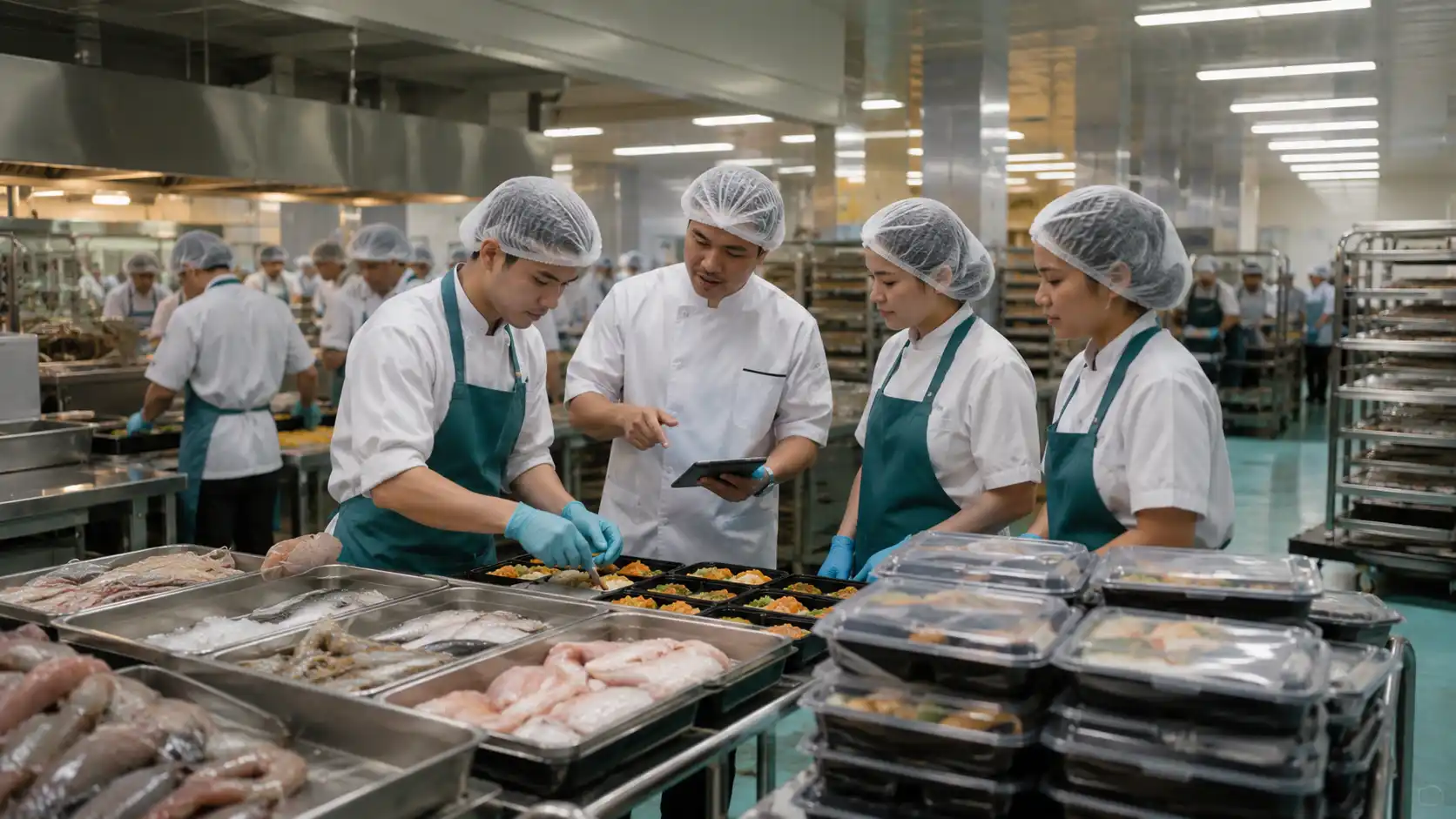
Second, strict operational blueprints for kitchen personnel are non-negotiable. Every team member must clear standardized hygiene handling assessments spanning washing, cooking, and final packaging. This practice ensures that food items—whether fresh or premium frozen variants—maintain optimal shelf-life and strict biological safety parameters.
The fusion of operational precision and adaptive digital tech distinguishes transient F&B players from resilient industry leaders. When physical infrastructure is managed with conscious integrity and backed by real-time data networks, systemic quality risks are driven down to absolute zero.
FAQ (Frequently Asked Questions)
- What triggers operational failure in a centralized kitchen model?
Most failures are caused by broken cold chain management, unstandardized communication workflows, and a lack of real-time inventory tracking systems.
- How does technology aid in maintaining food product quality and hygiene?
By integrating IoT devices for automated climate monitoring and deploying management software that ensures inventory rotation adheres strictly to FIFO principles.
- Why is standardization vital for large-scale food enterprises?
Standardization eliminates product variance, secures consumers against contamination hazards, and anchors long-term brand equity in a volatile market.
- CNBC Indonesia (May 31, 2026) – Hingga Mei 2026, Ribuan Dapur MBG Kena Suspend
- Official Report of the National Nutrition Agency RI (May 2026)
- REVIU MBG Evaluation Dashboard Data (May 2026)
Published: May 31, 2026