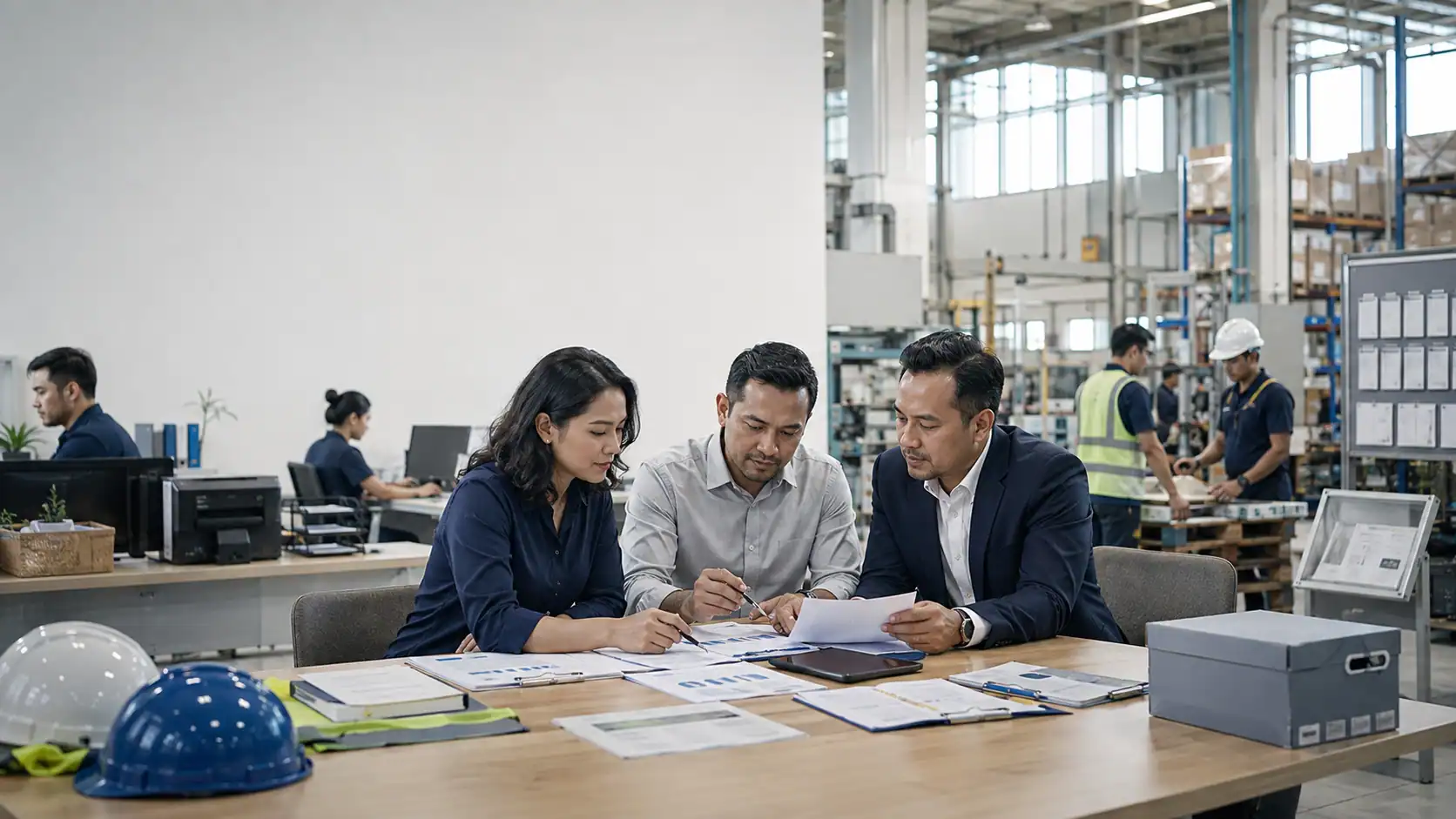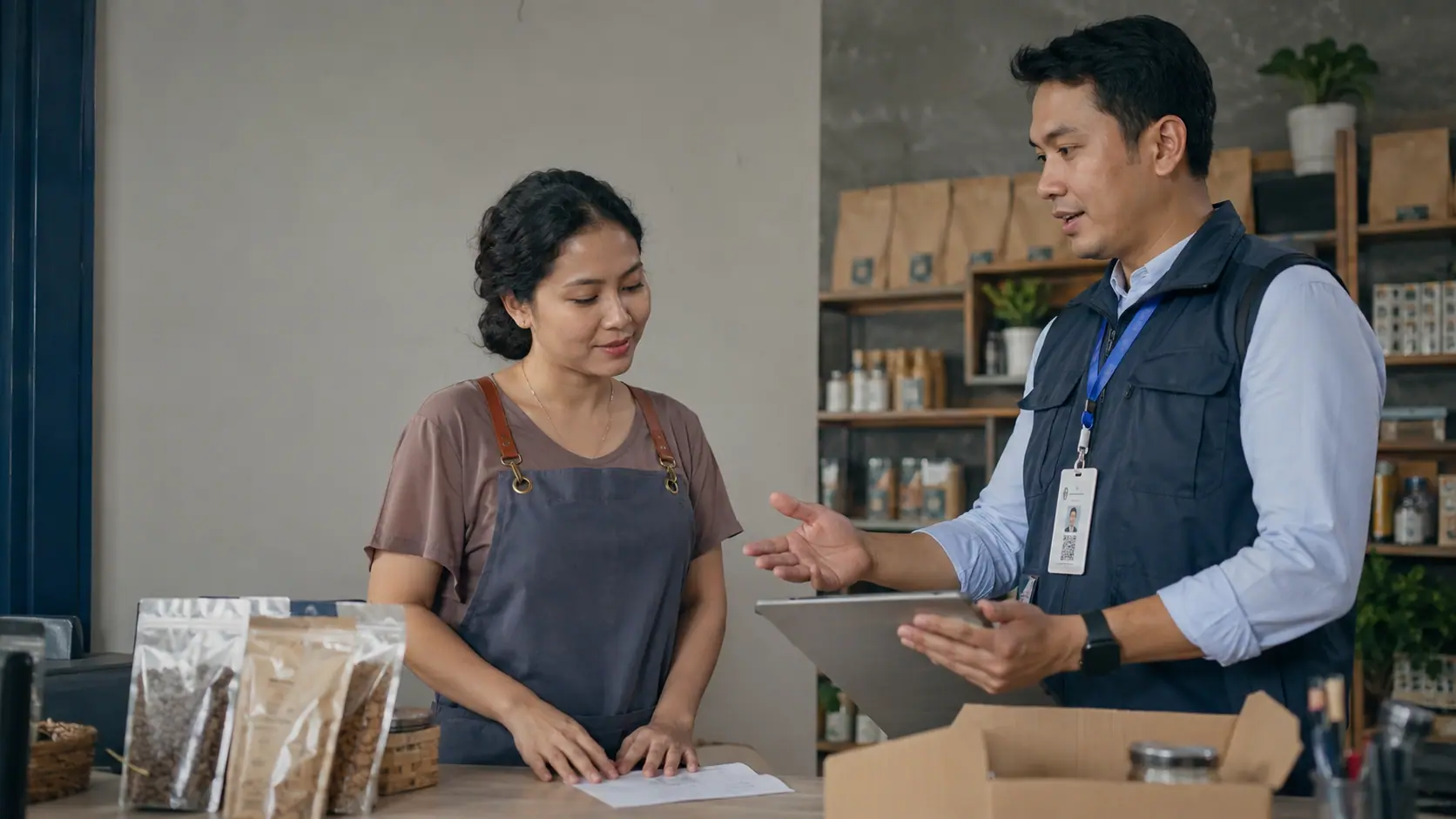

When someone arrives at a business premises wearing an official vest, carrying a badge and holding a digital device, many small-business owners have the same reaction:
What kind of survey is this? Is it mandatory? Is it safe?
Those questions are understandable.
For a home-based online seller, a food stall, a small workshop or an independent service business, a “census” can sound like something distant from daily operations. Yet for Statistics Indonesia, businesses of many sizes are part of the 2026 Economic Census (SE2026).[3][4]
And because the fieldwork is still underway through 31 August 2026,[1][2] this is a useful time to understand what is actually happening, what should be prepared, and how to make sure the process is handled properly.
The census is still underway through the end of August
Official announcements from regional BPS offices indicate that the online questionnaire period runs from May to August 2026, while door-to-door field data collection runs from 15 June to 31 August 2026.[1][2]
That means if you run a business and have not yet interacted with SE2026 enumerators, it is still possible that your business may be contacted in the coming days or weeks.
In multiple official communication materials, BPS explains that SE2026 covers businesses from small to large, including online and offline businesses.[3][4]
That matters because many smaller operators still assume:
“My business is too small to be counted.”
The logic of a census is the opposite. The broader the participation, the more complete the economic picture becomes.
It is not only for larger companies
One of the clearest messages in BPS communication materials is that small businesses still matter. BPS Surabaya states that SE2026 covers businesses from small to large and that even the smallest business, whether online or offline, remains important to the census.[3]
Other official local BPS materials mention examples such as online shops, small home workshops, office-based businesses and newly started small businesses as part of the census universe.[4]
A clear boundary still matters.
Materials explaining SE2026 coverage indicate that the economic census covers many economic sectors except agriculture, public administration/defence, and household activities for own use.[7]
For GATICORP readers, the practical message is straightforward:
- if you run a trading, service, manufacturing, food, online or other non-agricultural business, you are likely within scope;
- if you are uncertain, verify through the local BPS office or an official enumerator.
The safest way to recognise an official enumerator
This is where caution is entirely appropriate.
BPS has published the basic identifying features of official SE2026 enumerators. Official regional BPS materials describe enumerators as carrying:
- an SE2026 vest,
- an official ID badge with a QR code,
- and an assignment letter from the local BPS office.[5]
If an enumerator arrives, check these four things
- Is the person wearing an SE2026 vest?
- Is there an official photo ID?
- Can an assignment letter be shown?
- Is the interaction professional and non-coercive?
If one of those basic elements cannot be shown, a business owner is justified in being cautious and asking for further verification.
That does not obstruct the census.
It protects respondents while supporting the credibility of the census itself.
What should business owners prepare?
BPS is not asking every respondent to become an accountant overnight.
Still, the process is likely to go more smoothly if the business owner has basic information prepared. Based on the general structure of business data collection, the most sensible items to organise are:
- the basic identity of the business;
- its main activity;
- its location;
- contact details;
- the number of workers or people helping to run it;
- relevant operating information that can be explained honestly;
- and simple notes or records that help the respondent answer consistently.
The objective is not to make the business look more formal than it is.
The objective is to provide answers that are truthful and consistent with the current condition of the business.
BPS itself promotes the message TIR: welcome the enumerator, fill in the data correctly, and trust that confidentiality is maintained.[5]
For very small businesses without complete bookkeeping, that does not mean inventing numbers. If something is not recorded in detail, it is better to explain the real situation than to manufacture precision.
Is this related to taxation or a business inspection?
This is one of the most common concerns.
From the official materials reviewed for this article, SE2026 is framed as a statistical activity by BPS intended to improve the quality of economic data used for planning and policy.[4][6] This article did not locate official BPS material presenting SE2026 as a tax inspection.
Even so, responsible editorial practice requires nuance.
The better formulation is:
- SE2026 is an official statistical activity conducted by BPS;
- respondents should provide truthful information;
- and if there are specific questions about the use of the information, respondents are entitled to ask the official enumerator or BPS office for clarification.
In other words, this should be treated as an official statistical enumeration, not as a raid or informal visit.
BPS is trying to address the confidentiality concern
Small businesses often worry about one issue above all else: where will the data go?
BPS says respondent confidentiality is protected, and BPS Indonesia has publicly announced collaboration with BSSN, Peruri and Telkom to strengthen cyber security, digital infrastructure and data protection for SE2026.[6]
That does not mean risk disappears altogether. No large data system is risk-free.
But editorially, this step matters because it shows that public trust is not being treated as a purely methodological issue. It is also a data-security issue.
For businesses, the practical implications are simple:
- participate only with official enumerators;
- do not hand over business information to people whose identity is unclear;
- keep simple documentation of the interaction if needed;
- and verify with the local BPS office if anything feels uncertain.
What the data do not automatically tell us
SE2026 matters, but it should not be oversold.
First, the census does not automatically solve MSME problems. Better data can support better policy, but policy outcomes depend on what happens next.
Second, this article does not claim that participating in the census automatically gives a business access to grants, credit or special programmes. No verified official source in this research supports such a claim.
Third, although BPS highlights confidentiality and data security, business owners are still entitled to be reasonably cautious and to verify the identity of field officers.
Three practical steps for business owners this weekend
Before August ends, GATICORP recommends three simple actions.
1. Organise your basic business information
Do not wait until someone arrives. Make sure you understand your own business profile, activity and current operating condition.
2. Learn the identifying features of official enumerators
The vest, ID badge and assignment letter are not minor details. They are part of the respondent’s first layer of protection.[5]
3. Answer honestly, not cosmetically
Statistical data collection depends on information that reflects reality. For a small business, honesty is more useful than trying to sound more “formal” than the actual business condition.
For many small businesses, this is really about visibility
There is a broader reason the economic census matters.
A large part of Indonesia’s economy operates without large offices, sophisticated systems or perfect records. Yet those businesses still employ people, serve communities and keep local commerce moving.
The problem is simple: what is not visible in data is often harder to see in policy.
That is why SE2026 is more than an administrative exercise.
For many small businesses, it also concerns a very basic question:
will their existence be visible in the economic map of Indonesia?
Sources:
- [1] BPS Kota Madiun. Pengumuman Perubahan Jadwal Sensus Ekonomi 2026 (SE2026). 8 April 2026.
- [2] BPS Kabupaten Pasaman. Perubahan Jadwal Sensus Ekonomi 2026. 14 April 2026.
- [3] BPS Kota Surabaya. Usaha Kecil Juga Berarti di Sensus Ekonomi 2026. 21 July 2026.
- [4] BPS Kabupaten Kudus / materi resmi BPS daerah. Sensus Ekonomi 2026. 10 March 2026.
- [5] BPS Kota Bogor / BPS daerah lainnya. Siap Menerima Petugas SE2026? June 2026.
- [6] Badan Pusat Statistik Indonesia. Data Aman, Sensus Nyaman: BPS Gandeng BSSN, Peruri, dan Telkom untuk SE2026. 1 July 2026.
- [7] Materi cakupan SE2026 di BPS daerah. Lapangan Usaha Cakupan SE2026 dan Lapangan Usaha yang Tidak dicakup dalam SE2026. 2025.
- Editorial Notes
- Artikel tidak menyebut SE2026 sebagai audit pajak atau razia kepatuhan usaha.
- Artikel juga tidak menjanjikan bahwa ikut SE2026 otomatis memberi akses ke bantuan atau pembiayaan tertentu.
- “Data yang perlu disiapkan” ditulis sebagai panduan praktis berbasis kebutuhan umum pendataan usaha, bukan daftar kuesioner resmi lengkap.
- Keterangan tentang cakupan usaha dan pengecualian sektor di-cross-check menggunakan beberapa materi resmi BPS daerah, karena halaman penjelasan umum BPS pusat yang lebih detail tidak menjadi hasil utama dalam riset ini.
- Untuk isu kerahasiaan data, artikel hanya menggunakan klaim yang memang dinyatakan BPS dan tidak menambahkan jaminan absolut di luar itu.
Published: August 13, 2026
Source and editorial notes are managed through GATICORP CMS.