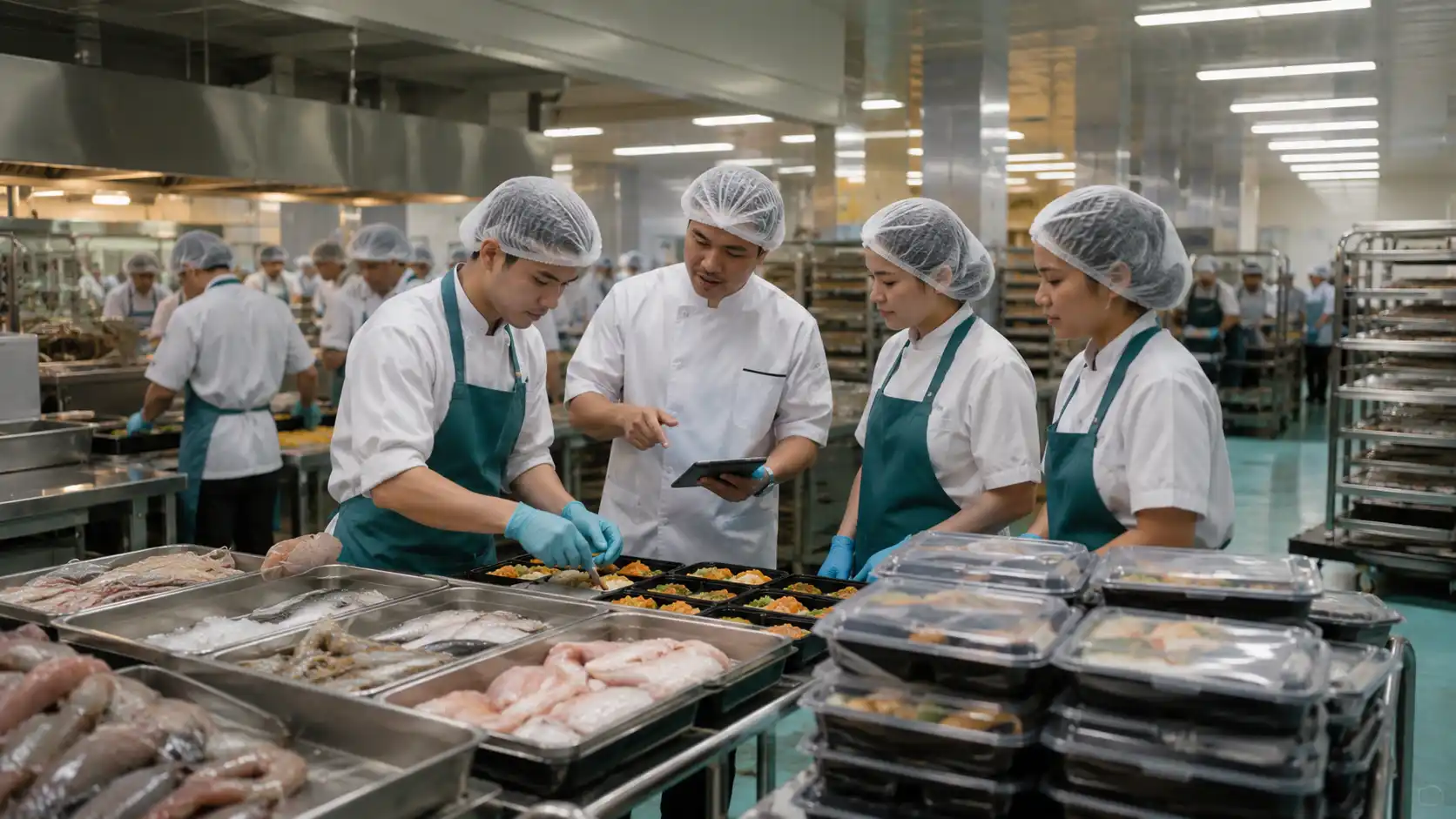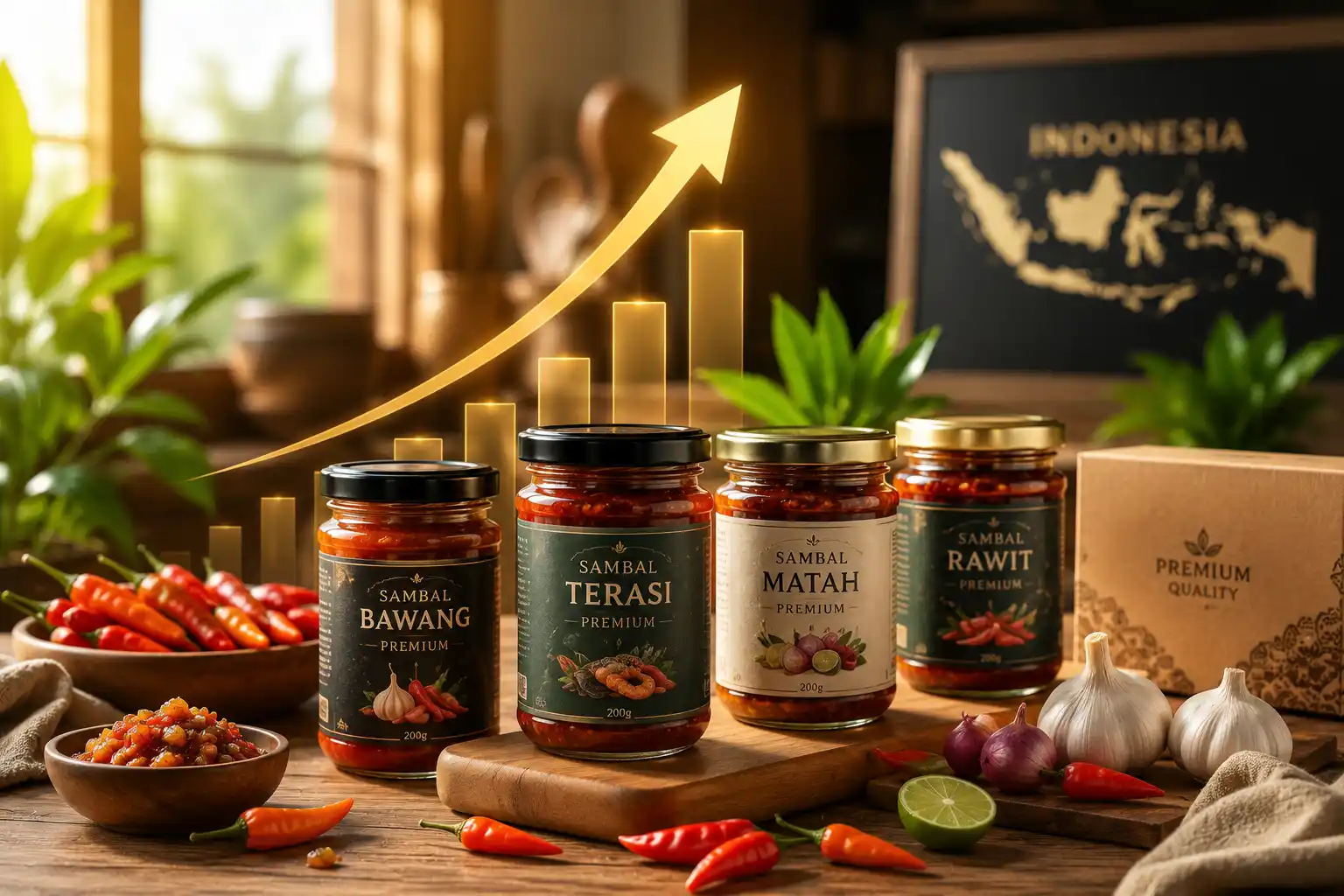

An urban production kitchen at midnight. The sharp aroma of fresh bird's eye chilies sautéed with shallots fills the room, cutting through the cold night air. In the corner, hundreds of sterilized glass jars stand in neat rows, ready to hold the blend that thousands of digital consumers will fight for tomorrow morning.
This is no longer a standard household kitchen relying on guesswork. This is a snapshot of precise, modern industrial production. This phenomenon marks the birth of a new era in the archipelago's culinary landscape: the industrialization of artisan condiments.
Shifting Tastes: From Bulk to Hygienic Packaging
Indonesians rarely eat without heat. However, the way they consume spicy flavors has changed completely. Busy urban lifestyles create a demand for convenient products, yet consumers refuse to compromise on authentic taste.
According to a Katadata report (2026), the instant seasoning and condiment market in Indonesia recorded a compound annual growth rate (CAGR) of 7.3% over the past two years. This figure indicates a significant market shift. Consumers are abandoning unbranded, open-air bulk chili pastes at traditional markets. Instead, they choose packaged alternatives that guarantee hygiene, flavor consistency, and shelf stability without harmful preservatives.
In fact, bottled chili paste has moved upmarket. It is no longer viewed as a cheap commodity sold for pennies on the bottom shelf of a grocery store. Emerging local brands have successfully positioned packaged chili pastes as premium items, commanding much higher price points by leveraging localized narratives like "Madura Onion Chili" or "Smoked Squid Chili."
Strict Regulations Driving Food Safety
This massive growth has naturally drawn the attention of regulatory authorities. Packaging oil- and chili-based products carries high biological risks if not handled scientifically. Proper sterilization and vacuum-sealing systems determine whether a product remains safe for long-term consumption or poses a health hazard.
Product registration data from BPOM (2026) shows a 17.1% year-on-year increase in distribution permit (MD) applications for ready-to-eat packaged chili products. This proves that local manufacturers are waking up to the vital importance of legal compliance and quality standardization.
This step is critical. Without a BPOM permit and halal certification, an F&B brand cannot penetrate modern retail networks or international export markets. Committing to rigorous sanitation details is what separates seasonal players from true industry leaders.
Major Opportunities in the Modern Culinary Ecosystem
For entrepreneurs and brand owners, this trend opens wide doors for product innovation beyond the frozen food sector. The market is far from saturated. In contrast, ample room for product differentiation exists through exploring distinct regional flavor profiles that major industrial players have yet to touch.
The ultimate challenge now shifts to supply chain consistency and visual marketing strategy. Aesthetic packaging, valid trademark protection, and aggressive digital distribution serve as the essential tools to win in an increasingly crowded arena.
The Indonesian culinary industry is maturing. Those who can successfully marry authentic traditional flavors with modern, legally compliant production management will emerge as the new market leaders.
FAQ
- Why is premium bottled chili paste significantly more expensive than standard options?
The price reflects the use of high-quality fresh ingredients, industrial-standard sterilization, secure packaging, and the costs of regulatory compliance such as BPOM permits and halal certifications.
- How do manufacturers ensure shelf life without using artificial preservatives?
Modern producers employ hot-filling methods, high-temperature sterilization, and vacuum-sealing technologies to prevent bacterial growth inside the packaging.
- Does local bottled chili paste have strong export potential?
Enormously so. Demand from the Indonesian diaspora and a rising global appreciation for fiery world cuisines act as primary catalysts, provided products meet international sanitary standards.
Sources
- Katadata.co.id: Indonesia Food and Condiment Industry Report 2026 (Accessed: June 14, 2026)
- Euromonitor: Southeast Asia Premium Condiments Market Study 2026 (Accessed: June 14, 2026)
- BPOM RI: Local Processed Food Distribution Permit Statistics 2026 (Accessed: June 14, 2026)
Published: June 14, 2026
Source and editorial notes are managed through GATICORP CMS.