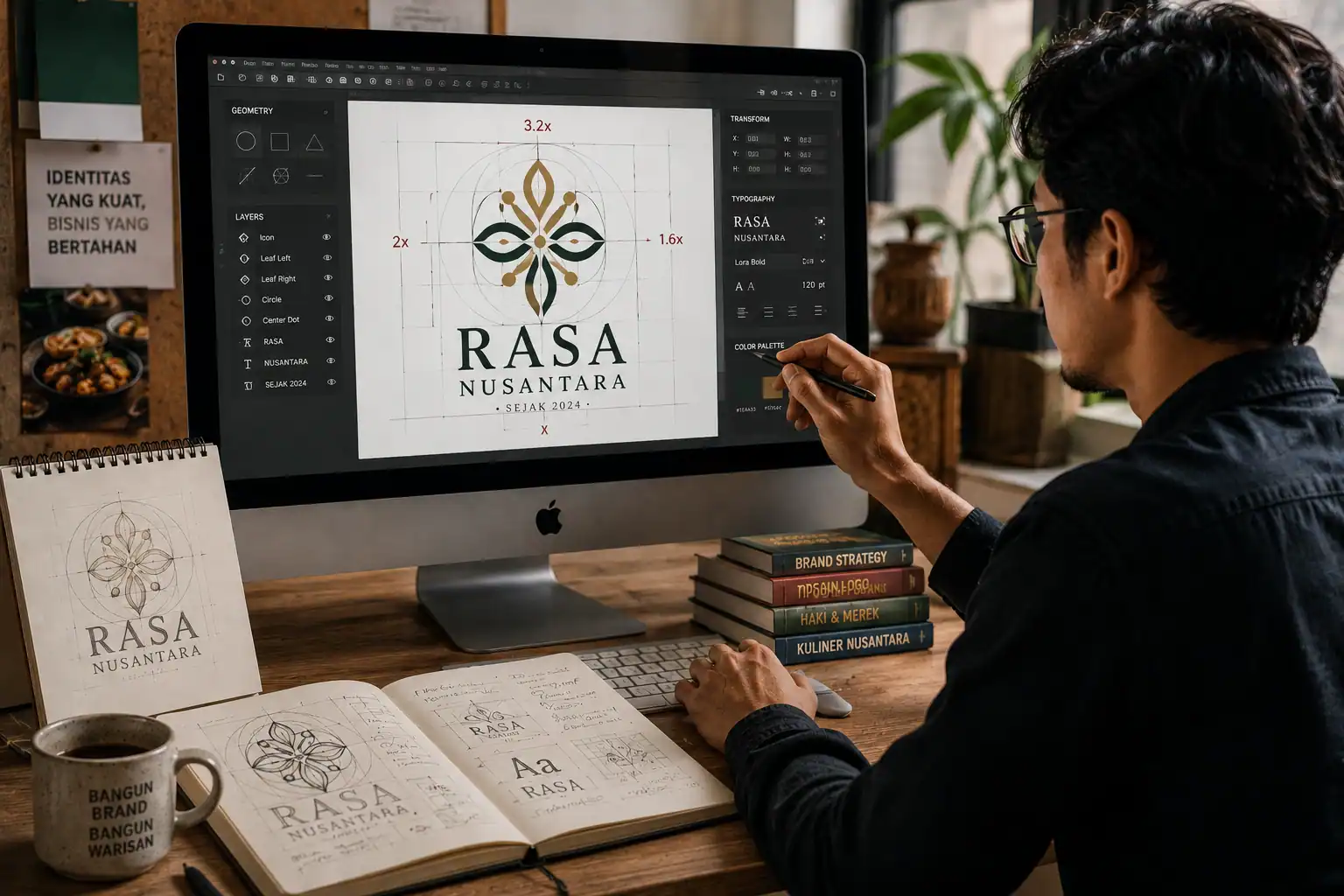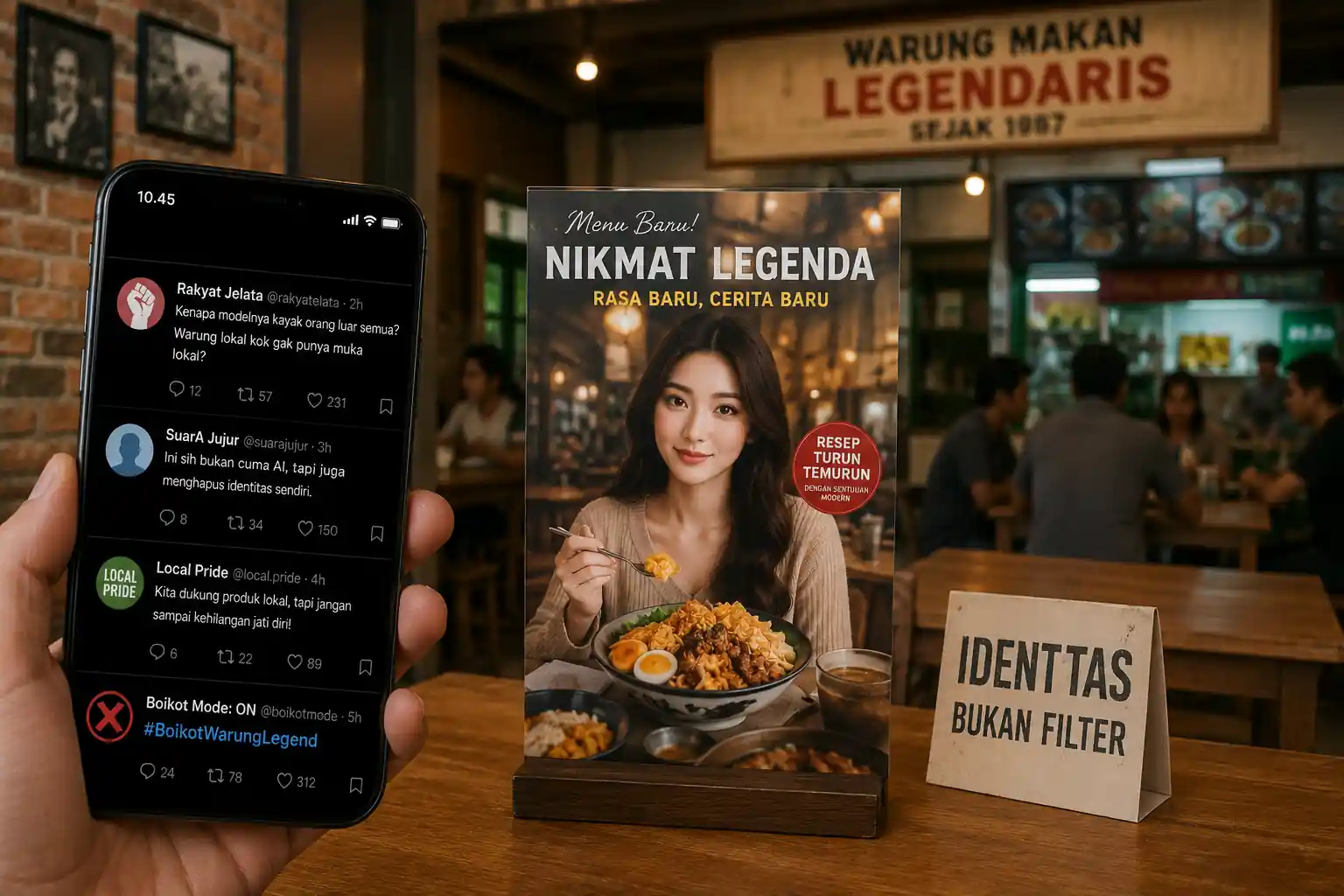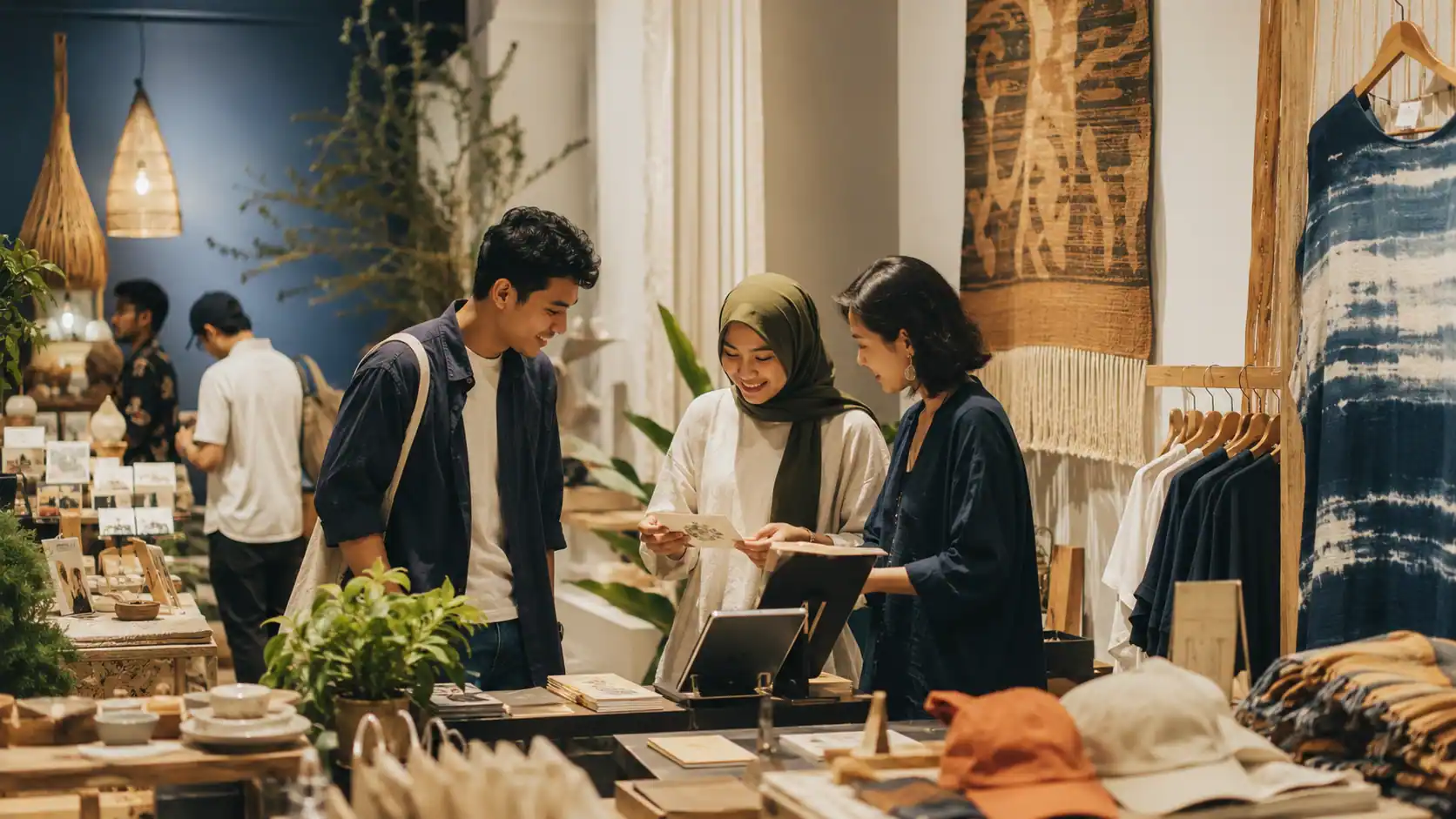

Inside a creative market, an illustration can undergo a subtle transformation.
At first, it exists only on a screen or inside a sketchbook. Then it appears on a tote bag, notebook, garment, package or display shelf. A few hours later, someone buys it—not simply because it is functional, but because it feels like it carries a story.
That is where the relationship between local brands and creators becomes commercially meaningful.
Indonesia’s Ministry of Creative Economy recently highlighted the collaboration between local souvenir brand Sovlo and 60 illustrators ahead of TERASI 2026, scheduled for 13–17 August at Agora Mall in Jakarta.[1] The ministry described such a platform as a space that brings illustrators, businesses and the public into one creative ecosystem, expanding market access, networks and collaboration opportunities.[1]
The article, however, is not about one brand alone.
That case is simply the entry point.
The larger question is this: why are creator collaborations becoming increasingly important for local brands that want to grow?
A good product is no longer enough on its own
Many local-brand founders begin with a sensible question:
how do we make a good product?
Quality still matters. Without it, even the most interesting collaboration becomes a short-lived impression.
But markets no longer move on functional quality alone.
In many categories—fashion, stationery, lifestyle goods, crafts, souvenirs and even food—customers also respond to:
- visual identity,
- story,
- community,
- retail experience,
- and the feeling that a brand has a recognisable character.
This is where creators enter.
An illustrator, designer or visual artist does not simply “decorate” a product. In many cases, they help translate a brand’s identity into something that can be recognised, remembered and shared.
Creative markets open more than transactions
The Ministry of Creative Economy has also expressed support for The Local Market ID as a platform for promotion, networking and product development.[2]
Spaces like that matter because they work on several levels at once.
There is commerce.
There is visibility.
There is interaction between brands and customers.
There is conversation between creators.
There is the potential for future collaboration.
And there is social proof: when a brand appears inside the right curated environment, customer perception often changes with it.
In other words, a creative market does not merely sell products.
It also produces trust, discovery and context.
For growing local brands, that context can be extremely valuable. A good product that remains undiscovered still struggles to grow.
Why does this matter more now?
Because the creative economy itself is expanding.
The Ministry of Creative Economy, citing the 2025 Creative Economy Statistics, says the sector grew 6.86% in 2025 and employed around 27.4 million workers, equal to 18.7% of Indonesia’s total workforce.[3]
Those figures suggest two things.
First, the creative economy is not peripheral.
Second, a larger sector also means a more crowded field.
In a busy market, local brands cannot rely on saying only:
“Our product is good.”
They also need to answer:
“Why should people remember us?”
Collaboration with creators helps answer that second question.
From visual identity to economic value
Creative work is sometimes treated as a “marketing extra”.
In practice, visual identity is often the first doorway before product quality gets a chance to prove itself.
An illustration can become:
- a point of difference on the shelf,
- a packaging system,
- promotional material,
- a limited collection,
- digital content,
- or even a repeatable IP asset.
That is why brand–creator relationships should not be viewed as one-way decoration. They are often a process of turning identity into economic value.
The ministry itself argues that strengthening local brands requires more than product quality. It also depends on design, branding, packaging, standardisation and intellectual-property facilitation.[4]
That matters.
It places design and IP much closer to the centre of business strategy.
Strong collaboration is more than “placing artwork on a product”
This is often what determines whether collaboration truly opens markets or merely produces a short campaign.
A shallow collaboration often looks like this:
the brand borrows the creator’s popularity;
the creator borrows the brand’s distribution channel;
the result looks attractive;
and everything stops once the event ends.
A stronger collaboration works differently.
The brand understands the identity it wants to build.
The creator understands the visual language being developed.
The product format actually suits the collaboration.
Usage rights are clear.
Attribution is clear.
The commercial purpose is clear: awareness, sales, positioning or community-building.
Without those foundations, a collaboration can succeed visually while remaining weak commercially.
The risks are often left unspoken
This is where both creative professionals and brand founders need more discipline.
First, ownership and usage rights
Who owns the work?
Is the brand buying it outright?
Is it licensing the work only for a specific period?
Can the design be reused elsewhere?
If those questions are not addressed at the beginning, a successful launch can create conflict later.
Second, the value split
Many collaborations fail not because the design is poor, but because the economics are vague.
Is the creator paid a flat fee?
Is there a royalty?
Is there a performance bonus if the collection sells well?
The clearer the structure, the healthier the long-term relationship.
Third, attribution
For creators, credit is not a minor issue. It affects portfolio value, reputation and future commissions.
For brands, proper attribution also builds a reputation as a credible collaborative partner.
Fourth, what remains after the hype
A collaboration built entirely on novelty can fade quickly.
That is why brands should ask:
once the collaboration generates attention, what brings the customer back?
The answer still lies in product quality, service and consistency.
So how does collaboration open markets?
There are at least four ways in which collaboration often expands market access.
1. Discovery
Creators bring communities, audiences or at least a fresh visual language that helps a product get noticed.
2. Differentiation
In a crowded market, a strong visual identity helps a brand stand out without relying entirely on price competition.
3. Storytelling
Collaboration gives people something to talk about: process, concept, artistry and relationship.
4. Distribution spillover
Events, curated markets, communities and creative partners often create informal distribution opportunities that can grow into something larger.
That is why spaces such as TERASI and The Local Market are more than simple selling events. They function as part of a broader market-access ecosystem.[1][2]
What should local brands do before collaborating?
For local-brand founders, there are five questions worth answering first.
Is the objective clear?
Are you trying to build awareness, launch a new collection, drive traffic, deepen community engagement or generate direct sales?
Is the creator genuinely aligned?
“Aligned” does not just mean popular. It means the visual language fits the brand’s identity.
Are rights and compensation written down?
A good relationship still needs a clear structure.
Is the product format right?
Not every artistic language translates equally well across all product categories.
What happens after launch?
Does the brand have a plan for sustaining momentum once the collaboration is visible?
These questions move a business from merely “wanting a collaboration” to using collaboration as a growth tool.
Creators also need bargaining clarity
Creators should not feel grateful merely because a brand wants to work with them.
They should also ask:
Who is the brand’s audience?
Does the brand fit my values and body of work?
How will my work be used?
Will my name be credited?
What are the limits of usage?
Am I building portfolio value, income, or both?
The best collaborations create more than short-term exposure.
The brand gains identity and market access.
The creator gains an economic channel and professional growth.
From collaboration to ecosystem
The most useful lesson from today’s local creative markets may not lie in any single event or one specific brand.
It lies in the structure.
Local brands grow more strongly when they do not operate alone.
Creators expand more effectively when they have commercial partners who value the work and provide access to the market.
Customers respond more deeply when products arrive with a living identity rather than generic form.
And creative-market spaces matter because they bring those three groups together in one place.
So when we ask why collaboration opens markets, the answer is not simply that collaboration is “interesting”.
The deeper answer is this:
today’s markets are increasingly opened by identity, story, community and the ability to turn creativity into sustainable economic relationships.
Sources:
- [1] Kementerian Ekonomi Kreatif/Badan Ekonomi Kreatif. Wamen Ekraf Dorong TERASI Perluas Akses Pasar Ilustrator Lokal. 20 July 2026.
- [2] Kementerian Ekonomi Kreatif/Badan Ekonomi Kreatif. Kementerian Ekraf Dukung The Local Market ID Jadi Etalase Produk Kreatif Indonesia. 20 July 2026.
- [3] Kementerian Ekonomi Kreatif/Badan Ekonomi Kreatif. Sensus Ekonomi 2026 Jadi Momentum Pemetaan Kekuatan Ekraf Nasional. June 2026.
- [4] Kementerian Ekonomi Kreatif/Badan Ekonomi Kreatif. Kementerian Ekraf dan LCI Perkuat Kolaborasi Brand Ekspor. 2 July 2026.
- Editorial Notes
- Artikel menggunakan Sovlo/TERASI sebagai kasus pembuka, bukan advertorial.
- Artikel tidak membuat kutipan atau narasumber fiktif dari ilustrator, founder, atau pengunjung.
- Pembahasan soal IP, lisensi, dan revenue-sharing ditulis sebagai analisis editorial dan praktik bisnis yang relevan, bukan berdasarkan kontrak internal Sovlo atau event tertentu.
- Artikel tidak menyimpulkan bahwa semua kolaborasi brand–kreator otomatis sukses.
- Angka pertumbuhan ekonomi kreatif dan tenaga kerja hanya diambil dari sumber resmi yang ditelusuri.
Published: August 13, 2026
Source and editorial notes are managed through GATICORP CMS.