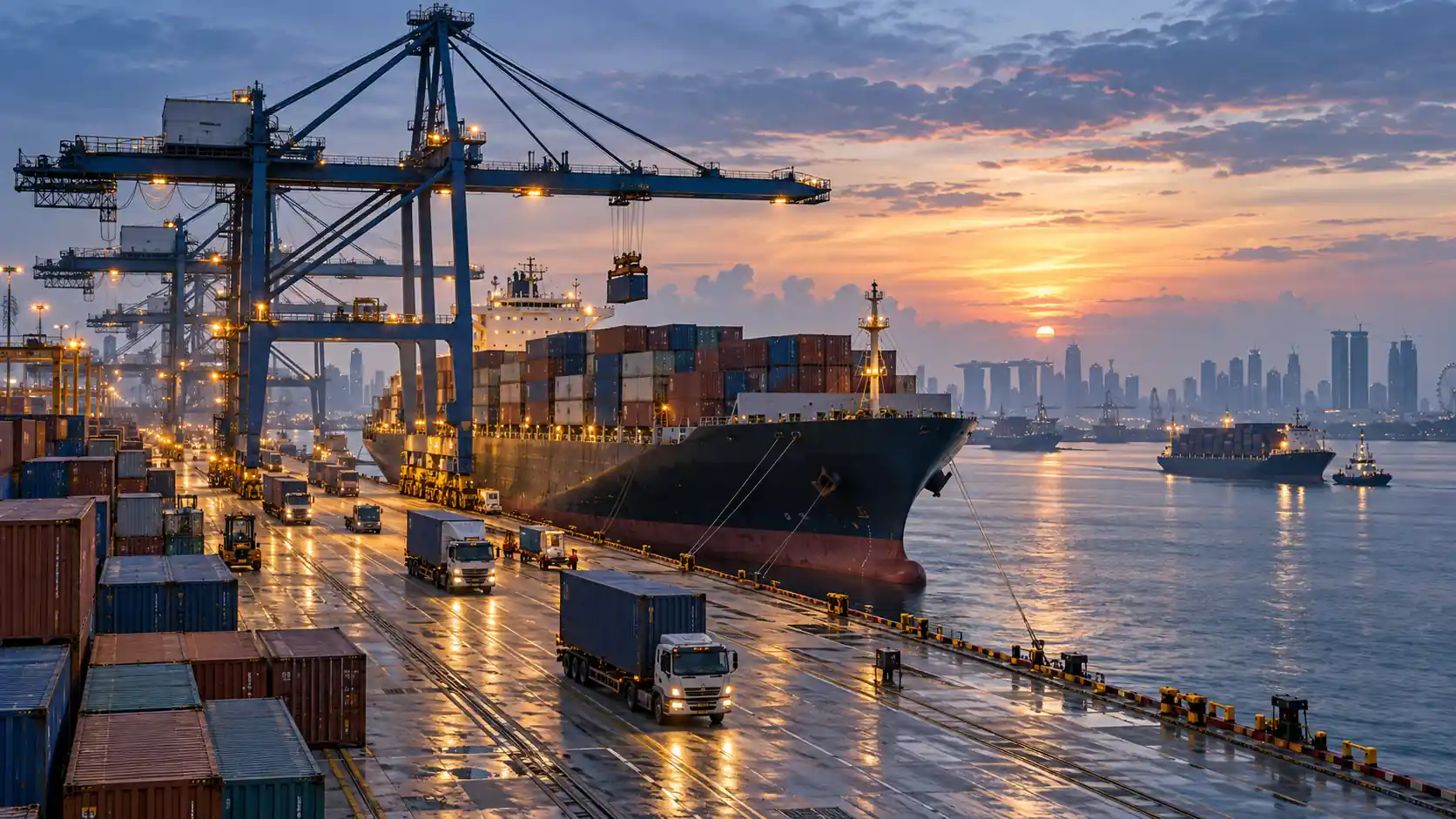

A business owner can encounter an apparently contradictory picture: inflation is described as contained, while supplier invoices, logistics costs, materials, energy, or selected inputs continue to feel more expensive.
Both can be true.
Indonesia’s Consumer Price Index increased 3.19% year on year in August 2026. Monthly inflation was 0.21%, while core inflation stood at 2.92% annually.[1] Bank Indonesia said headline inflation remained within the country’s 2026 target range of 2.5±1%.[2]
Yet BPS-Statistics Indonesia reported on the same release date that the national Wholesale Price Index rose 6.18% from a year earlier, accelerating from 5.66% in July.[3]
That does not make either measure more accurate than the other. They measure different stages of the economy.
For decision-makers, however, the contrast matters: the inflation experienced by households is not necessarily the same pressure entering a company’s cost base.
One economy, several layers of prices
Consumer inflation tracks prices paid by households. It is essential for understanding purchasing power, living costs, and price stability at the consumer level.
Wholesale prices sit further upstream.
Producer prices offer another perspective.
Indonesia’s general Producer Price Index across nine sectors increased 5.62% year on year in the second quarter of 2026. Manufacturing producer prices rose 4.94%, while transportation increased 6.01%.[4]
These figures should not be subtracted from one another and interpreted as a single “business inflation gap”. Their baskets, weights, and methodologies differ.
Together, however, they illustrate why companies may feel cost pressure even when headline consumer inflation remains relatively contained.
A distributor, for example, does not only experience the final retail price.
It manages procurement, fuel, warehousing, transport, financing, maintenance, packaging, and technology costs.
Those components rarely move in perfect synchronisation.
Cost pressure is uneven across industries
August’s wholesale price data illustrates the point.
While the national index rose 6.18% annually, the iron ore and minerals; electricity, gas and water section increased 14.50%.[3]
BPS also identified annual price increases in items including non-subsidised LPG, industrial diesel, ordinary rice, lubricants, and laptops.[3]
Wholesale prices in the construction group were 9.52% higher than a year earlier, with asphalt, reinforcing steel, cement, sand, and crushed stone among the contributing commodities.[3]
Two businesses operating under the same national CPI can therefore experience very different cost environments.
A contractor may be exposed to materials. A distributor may be more sensitive to energy and transport. A restaurant depends heavily on food inputs and utilities. A digital company may care more about salaries, imported devices, cloud services, and foreign-exchange movements.
Headline inflation is useful context.
It is not a substitute for company-level cost accounting.
Food prices deserve attention again
Pressure on consumers is uneven as well.
Bank Indonesia reported that volatile food prices increased 0.88% month on month in August after falling 1.68% in July. Annual volatile-food inflation accelerated to 4.06%.[2]
Chicken meat, bird’s-eye chilli, and rice were among the main contributors.[2]
Administered prices moved in the opposite direction during the month, falling 0.33%, partly due to airfares and petrol. On an annual basis, administered-price inflation stood at 3.32%.[2]
Businesses selling directly to households therefore face a two-sided problem.
They have to manage their own cost base while customers make purchasing decisions based on the prices they experience at home.
Passing every input increase directly to consumers is rarely the only answer.
Replace “What is inflation?” with a better question
For management teams, a more useful question is:
Which costs are actually moving inside our business?
Companies can begin with a simple cost-pressure map:
- raw materials or merchandise;
- energy;
- logistics;
- labour;
- rent;
- technology;
- financing;
- and other material expenses.
Track the actual movement of each component against previous periods.
The exercise is simple but often more useful than applying one national inflation number to an entire cost structure.
A margin bridge can add another layer: how much of a margin movement came from input costs, selling prices, discounts, volume, product mix, or operating efficiency?
That is where macroeconomic data becomes useful operational intelligence.
Small businesses need a different response
Larger companies often have more tools.
They can use long-term supplier agreements, vendor diversification, structured inventory management, and stronger purchasing leverage.
Small businesses may have fewer options.
Smaller purchasing volumes can mean higher unit costs. Cash buffers are thinner. Storage capacity is limited. A significant move in one or two core inputs can therefore reach cash flow quickly.
The response does not need to mimic a large corporation.
An SME can start by identifying its five largest cost items, reviewing alternative suppliers, identifying products with dangerously thin margins, reducing waste, and defining clear thresholds for price adjustments.
Not every increase should immediately be passed to customers.
Absorbing every increase indefinitely is equally unsustainable.
Price is only one lever
Businesses under cost pressure have choices beyond a blanket price increase.
They can improve product mix, prioritising products that make a stronger margin contribution.
They can reduce process waste, renegotiate purchasing terms, redesign packaging, or adjust service configurations without weakening the core customer proposition.
When prices genuinely need to rise, customer perception matters.
Customers do not see a company’s internal cost ledger.
They see what they are asked to pay and what they receive in return.
Price changes therefore need to remain connected to quality, consistency, service, convenience, or another form of tangible value.
What comes next
A 3.19% inflation rate does not mean cost pressure has disappeared.
A 6.18% wholesale price increase does not mean every company faces that exact cost increase either.
Both are aggregate indicators.
For business leaders, the more important question is what happens next to food, energy, transportation, construction materials, the exchange rate, and sector-specific input costs.
The strategic question is ultimately more precise:
Is our margin changing because of the broader economy—or because of our own cost structure and operating decisions?
Knowing the difference is the starting point for responding to inflation without making pricing decisions blindly.
- [1] BPS-Statistics Indonesia. “Inflation year-on-year in August 2026 stood at 3.19 percent.” 1 September 2026.
- [2] Bank Indonesia. “August 2026 CPI Inflation Remains Controlled.” 1 September 2026.
- [3] BPS-Statistics Indonesia. “National Wholesale Price Index Increased 6.18 Percent Year on Year in August 2026.” 1 September 2026.
- [4] BPS-Statistics Indonesia. “Producer Prices Recorded 2.83 Percent Quarterly Inflation in Q2 2026.” 3 August 2026.
Published: September 6, 2026