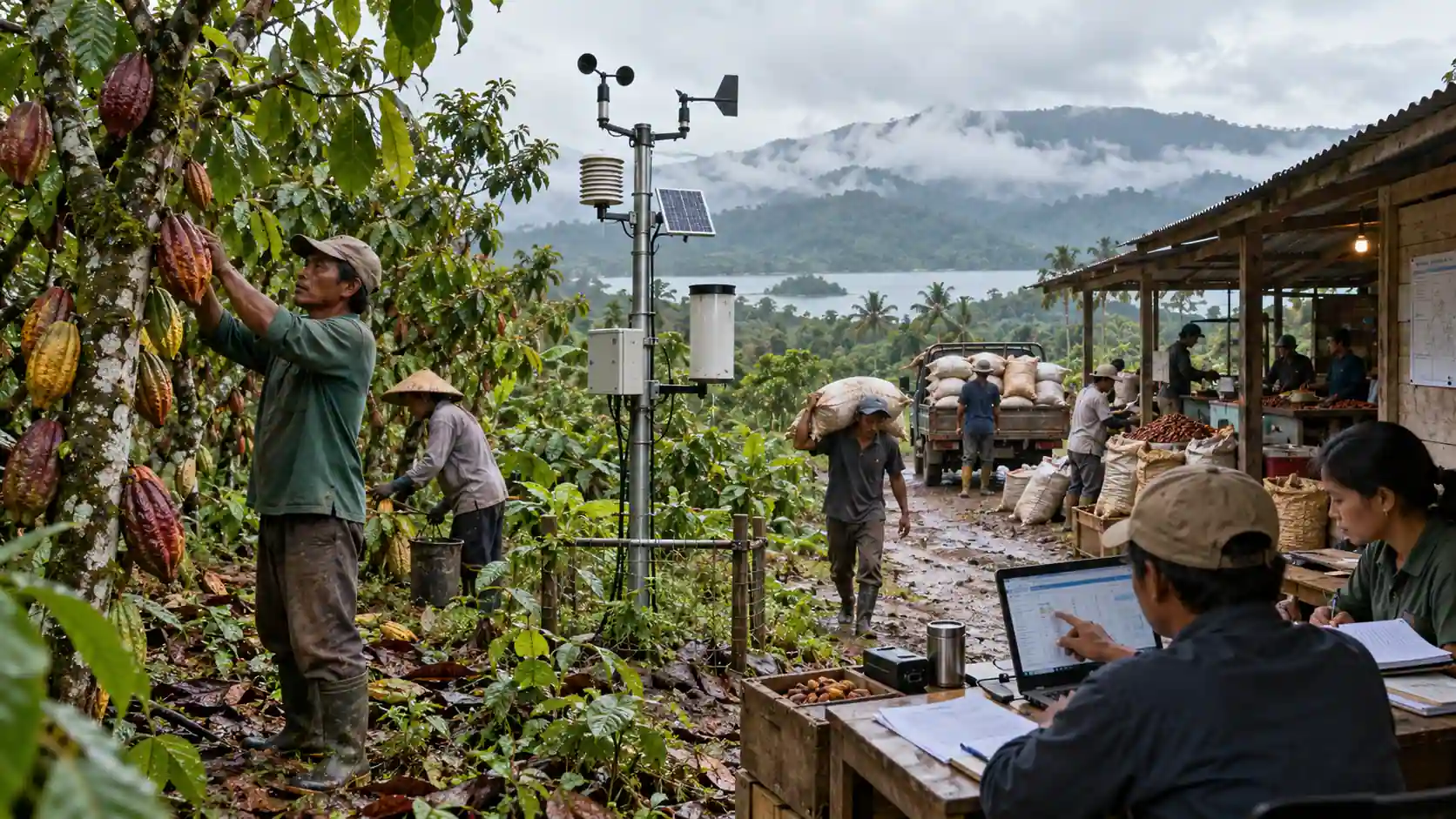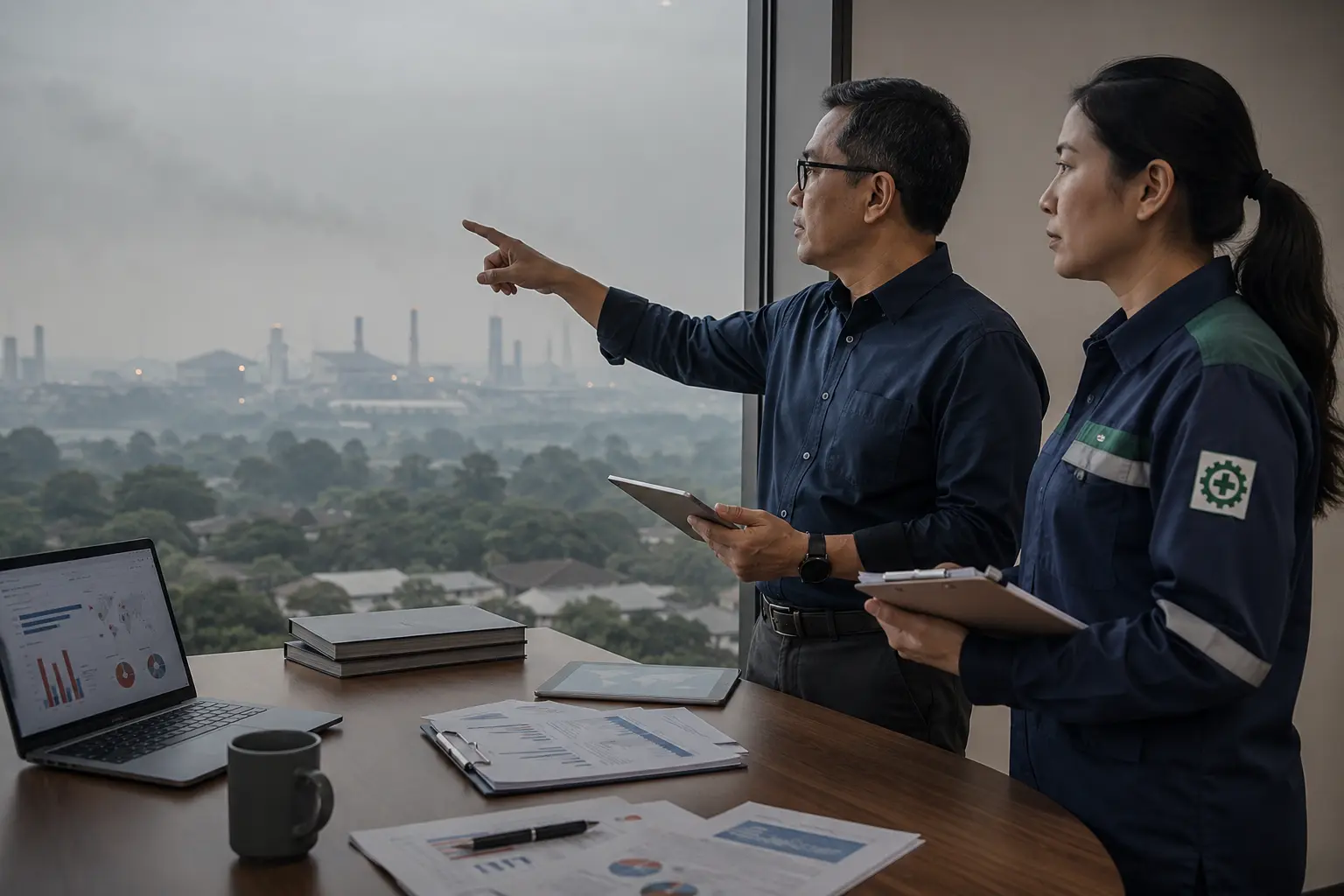

August is not only the peak dry-season period across much of Indonesia. For businesses, it is also a useful moment to revisit a risk that can appear distant from everyday operations: forest and land fires.
BMKG expects wildfire risk to intensify during August and September 2026, particularly across Sumatra and Kalimantan. By 29 July, the agency had detected 5,019 hotspots.[1]
Wildfires are clearly an environmental and disaster-management issue. For companies, however, their effects can travel through far more channels than flames reaching a building.
Business exposure extends beyond the fire zone
Forestry Ministry data cited by Reuters show that around 107,465 hectares were affected by fires between January and June 2026. Six provinces have been prioritised for response: Riau, Jambi, South Sumatra, West Kalimantan, Central Kalimantan and South Kalimantan.[2]
A company located far from a fire can still be exposed.
A critical supplier may operate in an affected province.
Transport may have to move through reduced visibility.
Outdoor employees may face deteriorating air quality.
A warehouse can remain physically undamaged while productivity declines because some activities are restricted.
Operational exposure is not the same thing as physical damage.
Haze is also a people and continuity issue
BNPB has advised people around smoke-affected areas to use masks when outdoors to reduce respiratory risk.[3]
For companies, that creates practical management questions.
Which employees spend the most time outdoors?
What happens when air quality deteriorates?
Can some activities be moved indoors?
How resilient is the operation if absenteeism increases?
These risks are better handled through a combination of occupational safety, HR planning, business continuity and communication than by waiting for conditions to become severe.
Suppliers can create hidden exposure
Wildfires also highlight the value of supplier mapping.
A company in Jakarta may own no assets in Kalimantan. Yet if a critical input originates there, a local disruption can still affect production.
The key question is not only:
“Where are our offices and factories?”
It is:
“Which locations must continue functioning for our business to operate?”
That can include suppliers, third-party warehouses, ports, transport providers and outsourced workers.
The more complex the supply chain, the more important it becomes to understand geographic risks beyond directly owned property.
Insurance should be understood before a loss
Insurance is one layer of risk transfer. It is not a substitute for continuity planning.
OJK explains that insurance contracts can provide compensation for loss, damage, costs, lost profits or third-party liability caused by uncertain events, depending on the agreed policy.[4]
That does not mean every wildfire-related disruption automatically generates a valid claim.
Coverage can vary according to the policy type, insured property, cause of loss, extensions, deductibles, exclusions and applicable triggers.
Business interruption needs particular attention. A reduction in revenue alone does not necessarily create coverage; the claim mechanism depends on the wording and trigger in the relevant policy.
The better question is therefore not:
“Do we have insurance?”
It is:
“Which scenarios are actually covered?”
Five areas to review
GATICORP uses five areas as an editorial readiness framework, not a regulatory standard.
People
Identify employees with the greatest exposure to smoke, heat and outdoor work. Prepare alternatives if conditions deteriorate.
Site
Review facility location, firefighting access, surrounding vegetation, water availability, ventilation and emergency procedures.
Suppliers and Logistics
Map critical suppliers and transport routes. Identify alternatives where replacement is difficult.
Continuity
Determine how long operations can continue if one location, supplier or route is disrupted, and which processes must be restored first.
Insurance
Review insured values, insured locations, perils, exclusions, deductibles, business-interruption triggers and claim-documentation procedures with the insurer or broker.
Resilience is built before conditions worsen
Not every company will experience wildfire disruption at the same level.
The appropriate response is therefore neither panic nor buying additional protection without understanding the exposure.
A more useful response is to map dependencies.
Where are employees located?
Where are critical suppliers?
How long can operations continue?
What does the policy actually cover?
And who makes decisions if conditions change rapidly?
Indonesia’s 2026 wildfire season is another reminder that environmental events can become business risks through multiple channels.
Companies that understand those channels earlier are better positioned to keep people, operations and cash flow functioning when external conditions become less predictable.
- [1] BMKG. Musim Kemarau di bawah Normal dan El Niño Kuat, BMKG Gencarkan Modifikasi Cuaca dan Dukung Mitigasi Lintas Sektor. 30 July 2026.
- [2] Reuters. Indonesia races to contain fires as haze spreads across region. 11 August 2026.
- [3] BNPB. Perkembangan Situasi dan Penanganan Bencana di Tanah Air, 3 August 2026.
- [4] Otoritas Jasa Keuangan. Perasuransian.
- [5] Asosiasi Asuransi Umum Indonesia. Polis Standar AAUI.
- El Niño tidak disebut sebagai penyebab kebakaran; kondisi kering dapat memperbesar penyebaran risiko.
- Data 107.465 hektare adalah Januari–Juni 2026 dan berasal dari Kementerian Kehutanan sebagaimana dikutip Reuters.
- Hotspot bukan identik dengan jumlah kebakaran atau luas lahan terbakar.
- Artikel tidak mengklaim asap atau karhutla otomatis ditanggung asuransi.
- Business interruption sangat bergantung pada wording dan trigger polis.
- “Five-area readiness framework” merupakan framework editorial GATICORP.
- Artikel bukan rekomendasi produk asuransi tertentu.
Published: August 19, 2026