
A problem with one food product does not necessarily mean that everything produced by the brand is affected. The issue may originate from one ingredient, one supplier, one production date or one particular batch.
That distinction is useful only if the business can prove it.
Indonesia's Food and Drug Authority Regulation No. 22 of 2025 updated the country's processed-food recall framework and replaced the 2017 regulation. It covers product withdrawal, follow-up action, destruction and traceability mechanisms that support effective recalls when processed food fails to meet applicable requirements. BPOM has continued to describe traceability as an important tool for identifying the origin of ingredients, production processes and product distribution.
For F&B businesses, the implication goes beyond compliance.
The more precisely a business can identify the affected product, the less of the business may need to stop.
A Recall Begins Long Before Anything Is Withdrawn
Imagine a sauce producer discovering that an ingredient supplied by a particular vendor may not meet requirements.
The first question is not simply: what went wrong?
The business also needs to know when the ingredient arrived, which production runs used it, which finished-product batches resulted, how many units were produced and where those products were distributed.
That is the role of traceability.
FAO describes traceability as the ability to follow the movement of food through specified stages of production, processing and distribution. In a recall, the system helps identify lots or batches, trace raw materials back towards suppliers and track finished products forward through the supply chain.
The system does not necessarily need to begin with expensive technology.
Purchase orders, receiving records, lot numbers, production dates, batch sheets, invoices and delivery records can already form the foundation—provided they are consistent and connected.
One Batch or the Entire Product Line?
This is where traceability acquires an economic value that can easily be overlooked.
If a business cannot determine the boundaries of the problem quickly, the safest response may need to cover a much wider area.
Several days of production could be held. Distributors may need to inspect more inventory. Outlets could stop selling more products than necessary. Customer communication becomes broader.
A stronger system narrows the investigation:
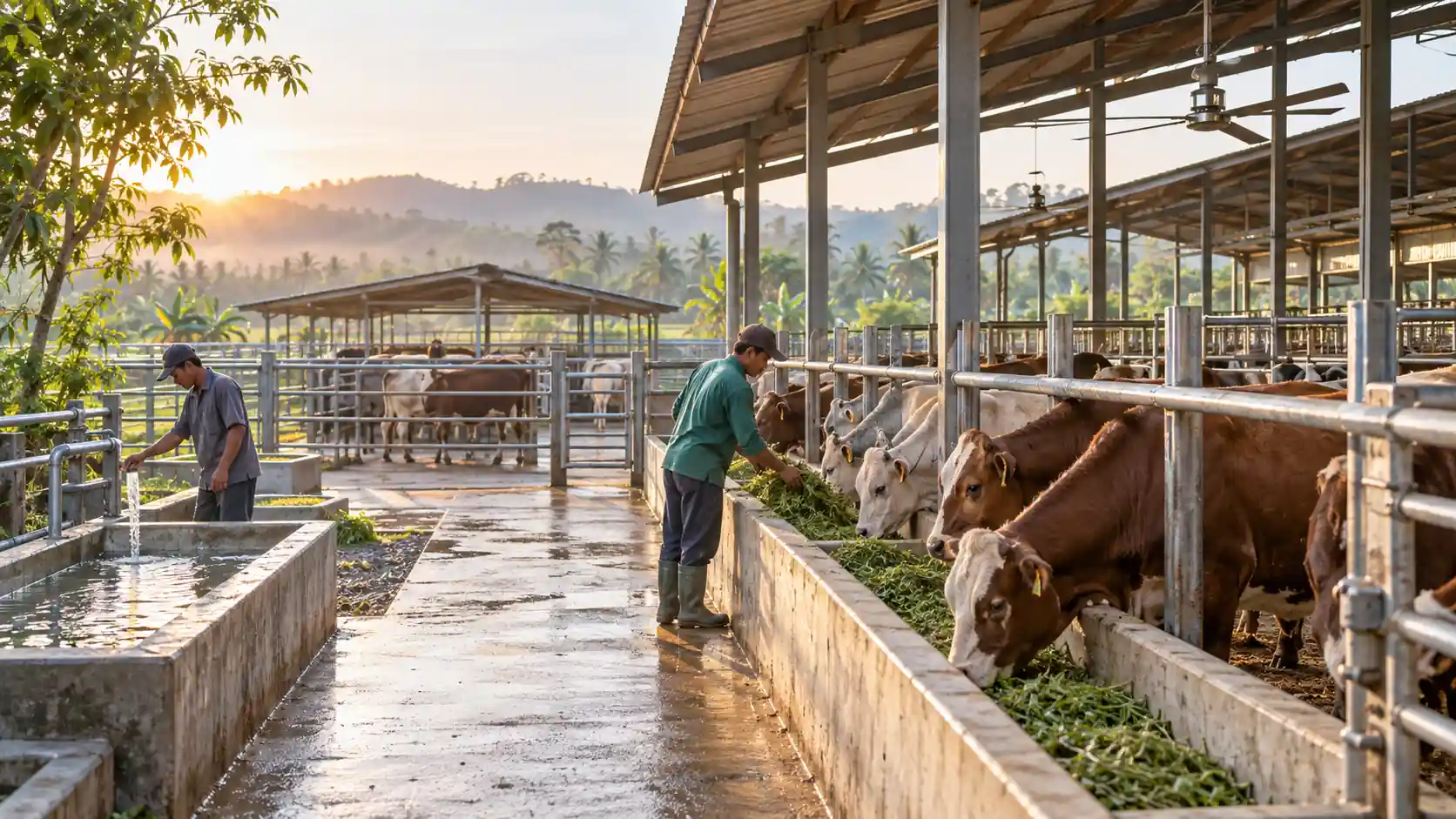
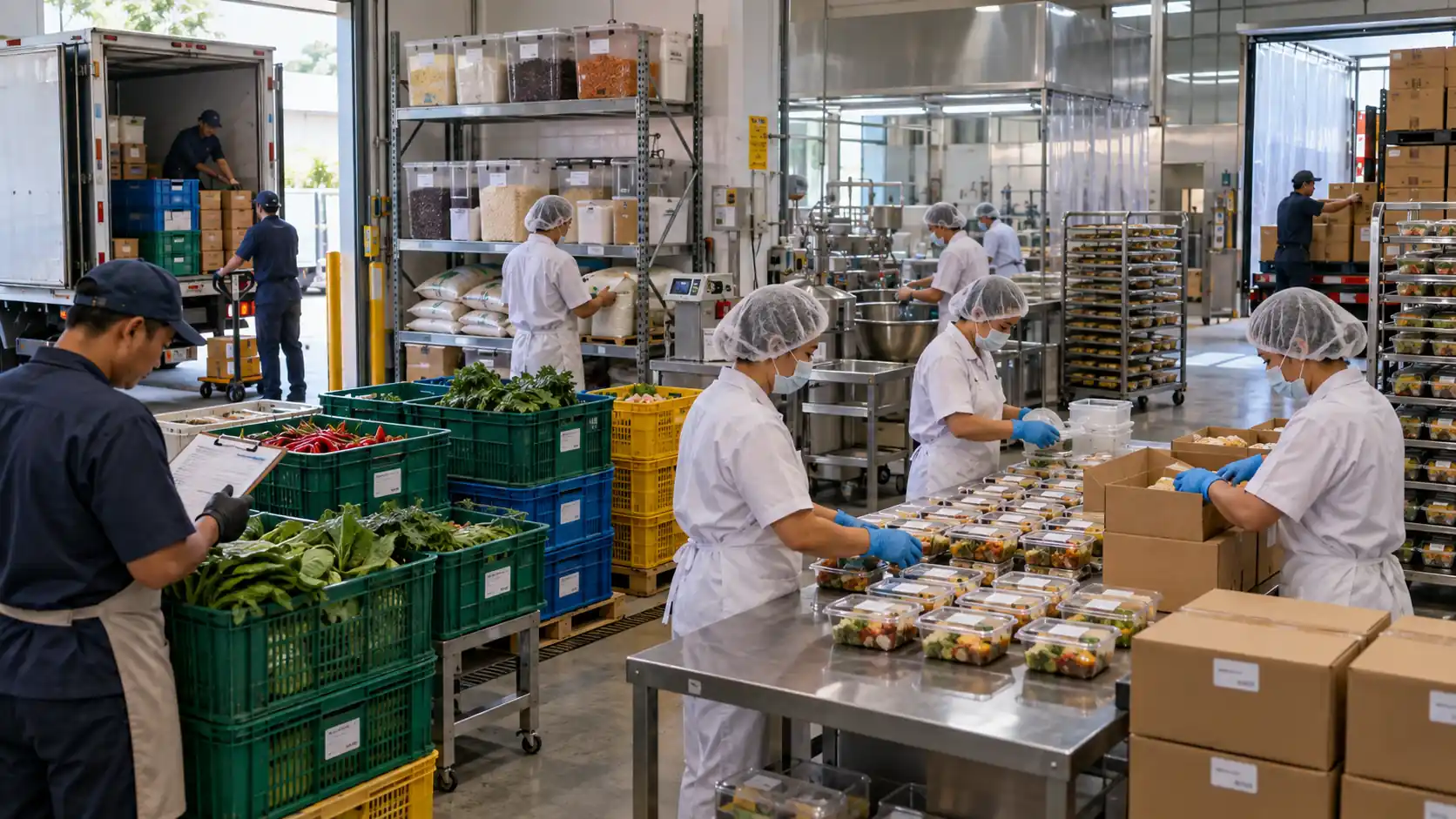
which supplier → which material lot → which production run → which finished batch → which destination.
BPOM also includes traceability and product-withdrawal procedures among quality documentation relevant to Good Manufacturing Practices for Processed Food.
Traceability therefore does more than identify failures.
It helps businesses limit the radius of loss.
Test the System Before a Crisis Tests It
A procedure can look excellent on paper and still fail when it is needed.
Suppliers may be recorded under inconsistent names. Batch codes may not be applied consistently. Goods can move between outlets without documentation. An invoice may show what was shipped but not connect the shipment to the production batch. The only employee who understands the entire process may be absent.
That is why a mock recall has practical value.
The concept is straightforward: choose one batch as though a problem had been identified, then attempt within a defined period to establish where all critical materials originated and where all finished products were sent.
BPOM has used mock recall exercises in food-safety mitigation guidance to test whether recall systems work effectively, while FAO stresses that supply-chain participants need practices that allow food lots to be rapidly identified, located and withdrawn when problems are suspected or confirmed.
A mock recall does not mean a company is experiencing an actual recall.
It is closer to a fire drill: performed while conditions are normal to discover what might fail during a real event.
Recall Readiness Is Not Only for Large Factories
Small F&B businesses may assume traceability becomes relevant only after they grow into major manufacturers.
In practice, the need increases as distribution expands.
A bakery selling only from one store may still be able to identify which day's production created a product. Once it operates a central kitchen, several branches, resellers, marketplace channels, frozen products or distributors, the product path becomes more complex.
Every additional distribution point increases the cost of uncertainty.
Research indexed by FAO AGRIS on micro food enterprises with PIRT registrations in Jakarta and Bogor also illustrates that traceability and recall capability are relevant at micro-business level rather than exclusively to large industrial manufacturers.
The specific regulatory requirements, however, can differ depending on the product, business size, licensing model and whether it falls under BPOM, PIRT, ready-to-eat food or another regulatory regime.
Businesses therefore need to identify the rules applicable to their own operations.
Five Links a Business Should Be Able to Find
As a practical readiness test, an F&B business should be able to connect at least five parts of the chain.
Supplier → Material
Who supplied it, and which lot was received?
Material → Production
Which production run used that lot?
Production → Batch
Which finished products and quantities were created?
Batch → Distribution
Which outlets, distributors, resellers or channels received them?
Distribution → Action
Who can stop sales, contact channels, isolate inventory and document the response?
This is a GATICORP operational framework rather than an official BPOM template.
Its purpose is simple: a business should be able to move from the problem to the affected product without starting its investigation from zero.
Speed Is Part of Food Safety
During its Ramadan and Eid 2026 intensified supervision programme, BPOM found 56,027 processed-food items that did not meet requirements across inspected facilities, including unregistered, expired and damaged products. BPOM stated that follow-up could include securing products, ordering withdrawals, returning goods to suppliers and destruction. The figures came from a targeted risk-based enforcement programme and should not be interpreted as the rate of non-compliance across Indonesia's entire food market.
For business owners, the more important lesson is not that a recall is inevitable.
It is that not every risk can be prevented.
A supplier can fail. Test results can change. Labelling can contain an error. Packaging can malfunction. New information can emerge after products have entered the market.
When that happens, the quality of the response depends heavily on what was prepared beforehand.
A mature food business does not only know how to answer:
“How did we make this product?”
It can also answer:
“If we had to recall it tomorrow morning, we know exactly where to look.”
- BPOM — Regulation No. 22 of 2025 on the Recall and Destruction of Processed Food. Issued on 24 July 2025, currently in force, and replacing BPOM Regulation No. 22 of 2017. Used as the current regulatory basis for processed-food recalls and destruction.
- BBPOM Semarang, November 2025 — strengthening traceability systems and HACCP. Used to confirm the application of traceability principles in the context of Regulation 22/2025 and the importance of tracing ingredients, production and distribution.
- BPOM — information on Good Manufacturing Practices for Processed Food. Used to establish that procedures for traceability and product withdrawal form part of relevant production-quality documentation.
- FAO/WHO Codex — Principles for Traceability/Product Tracing and FAO Traceability & Recalls. Used for international definitions and the role of traceability and recall in food-control systems. These sources do not replace Indonesian BPOM requirements.
- FAO/WHO Guide for Developing and Improving National Food Recall Systems. Used for backward and forward tracing concepts and the importance of lot/batch identification and records that can be produced rapidly.
- BPOM, 11 March 2026 — Ramadan and Eid Food Supervision. The 56,027 non-compliant items came from risk-based inspections of 1,134 facilities and are not presented as a prevalence estimate for Indonesia's entire food market.
- The Supplier → Material → Production → Batch → Distribution → Action sequence is a GATICORP editorial framework, not an official BPOM format.
- “Mock recall” is discussed as an operational readiness practice. Specific legal obligations vary by business type, product, licensing regime and applicable regulation.
- This article is not legal or case-specific food-safety advice.
Published: October 9, 2026