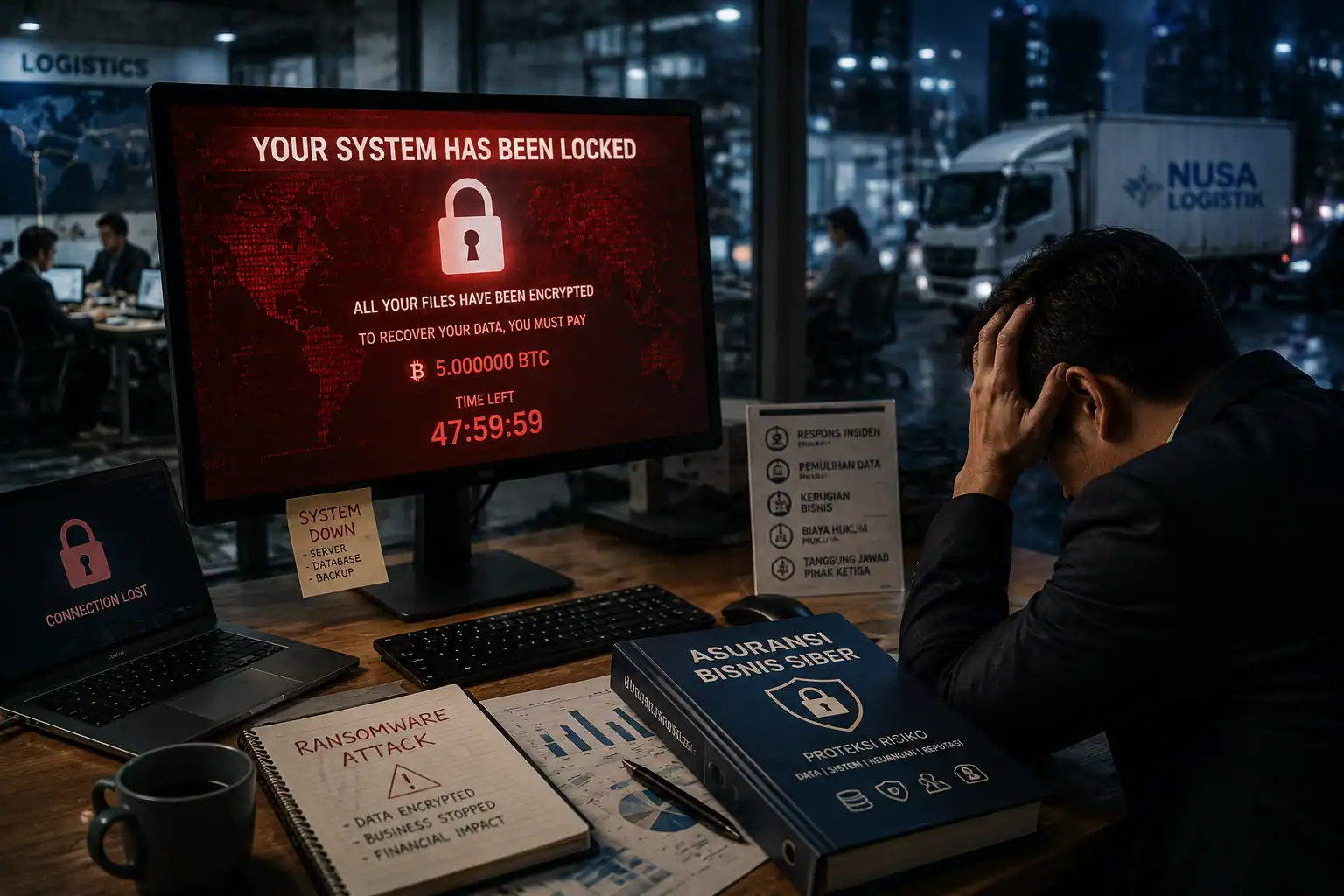

The workstation monitor suddenly flashed blood red. A cryptic text message materialized on the screen demanding hundreds of millions of rupiah in cryptocurrency ransoms. Within seconds, the entire distribution network of a prominent logistics firm in Jakarta ground to a complete halt.
The Monday Morning Red Screen
This terrifying scenario is not a scene from a cyberpunk thriller. It represents the harsh reality encountered by the board of directors at a national shipping firm earlier this week. International ransomware syndicates effectively locked down all customer tracking codes. Consequently, cargo trucks remained stranded at warehouse gates because digital shipping manifests were entirely inaccessible.
Panic quickly reverberated across the executive boardroom. Direct financial damages accumulated with every passing hour the network remained dark. Compensation demands from digital merchant partners began flooding the corporate emergency call center. The executive leadership team realized their IT security walls had completely collapsed under pressure.
The modern digital landscape shows no mercy to unprepared enterprises. This high-profile incident serves as a loud wake-up call for the commercial ecosystem across Indonesia. Cyber threats no longer merely target data files; they directly cut the vital arteries of business operational cash flow.
When Digital Walls Crumble: The Hard Data
Many enterprise owners incorrectly assume that installing expensive antivirus software guarantees absolute safety for their operations. This flawed mindset frequently leads to sudden corporate insolvency. According to data published by CNBC Indonesia (2026), cyberattacks targeting corporate networks in Indonesia surged by 38% over the past twelve months.
This volatile situation is aggravated by a severe lack of financial risk mitigation strategies among local business operators. An official OJK report (2026) highlights that commercial general insurance penetration within the country remains stagnant at just 1.5% of Gross Domestic Product (GDP). Most executives still view insurance policies as unnecessary overhead rather than critical strategic investments.
Yet, the economic fallout of a network breach remains devastating. A comprehensive study by the Chamber of Commerce (2026) reveals that the average financial loss from a single security incident at a medium-sized enterprise reaches Rp 1.2 Billion. This metric encompasses network restoration fees, lost sales opportunities, and third-party legal penalties.
Utilizing Corporate Insurance as a Financial Shield
This is where the pivotal role of modern cyber corporate insurance introduces an operational lifeline. This dedicated coverage is not engineered to block hackers from breaking into your computer networks. Instead, it functions as an ironclad financial safety net when your technological defenses fail to contain an infiltration.
The primary advantages of comprehensive cyber protection include covering all forensic digital investigation expenses required to locate data leaks. Additionally, the policy offsets direct revenue losses stemming from sudden business interruptions during system rebuilding phases. It also manages legal defense fees resulting from consumer class-action lawsuits over leaked private documents.
Securing a cyber protection policy delivers absolute control and peace of mind to business executives. You no longer need to exhaust your core corporate capital reserves to settle digital extortion fees or hire emergency IT firms. The insurance provider assumes the financial weight according to the agreed policy boundaries.
Tactical Measures to Safeguard Enterprise Longevity
Preserving corporate continuity requires deliberate, structured action long before a digital catastrophe strikes your network. Re-evaluate your organizational risk management blueprint today. Do not wait until your critical databases are held hostage by external criminals before seeking emergency remedies.
A prudent initial move involves orchestrating an exhaustive audit of your digital and physical corporate asset vulnerabilities. Following the assessment, select a corporate insurance policy from a provider renowned for rapid, transparent claims settlements. This legal protection measure is urgent for firms managing thousands of sensitive transactional records daily.
A robust financial shield grants you the secure space needed to focus entirely on long-term commercial growth. You can scale your online retail systems and adopt automated software tools without constant operational anxiety. Establish risk management as a foundational pillar to build a resilient, adaptive enterprise in Indonesia.
FAQ
- Does cyber corporate insurance cover physical hardware damaged during a hack? Standard cyber insurance policies primarily focus on data corruption, software restoration, and third-party legal liabilities. However, you can integrate specialized property riders to protect physical server hardware damaged by digital attacks.
- How do underwriters determine premium rates for corporate cyber protection? Premium calculations depend heavily on your specific industry sector, the volume of sensitive data managed, past security incident records, and the quality of the active IT defense frameworks deployed across your enterprise.
- Can small structured businesses like a PT Perorangan apply for this insurance? Yes. Modern corporate insurance underwriters offer flexible, scalable cyber protection packages tailored directly to the operational constraints and budget capacities of single-owner corporate entities.
Key Takeaway for Executives
A great brand takes decades to construct but requires only a single click on a malicious link to disintegrate into dust. Never gamble the future of your commercial investments on temporary digital luck. Safeguard your corporate assets with reliable corporate insurance to secure an uninterrupted runway for future expansion.
- CNBC Indonesia Special Report: Ransomware Waves Hitting National Logistics Networks (July 2026).
- Financial Readiness Statistics & Commercial Insurance Penetration Data (OJK Logs, May 2026).
- Economic Loss Analysis of Cyber Incidents in Mid-Market Sectors (Chamber of Commerce & AAUI Study, June 2026).
Published: July 21, 2026