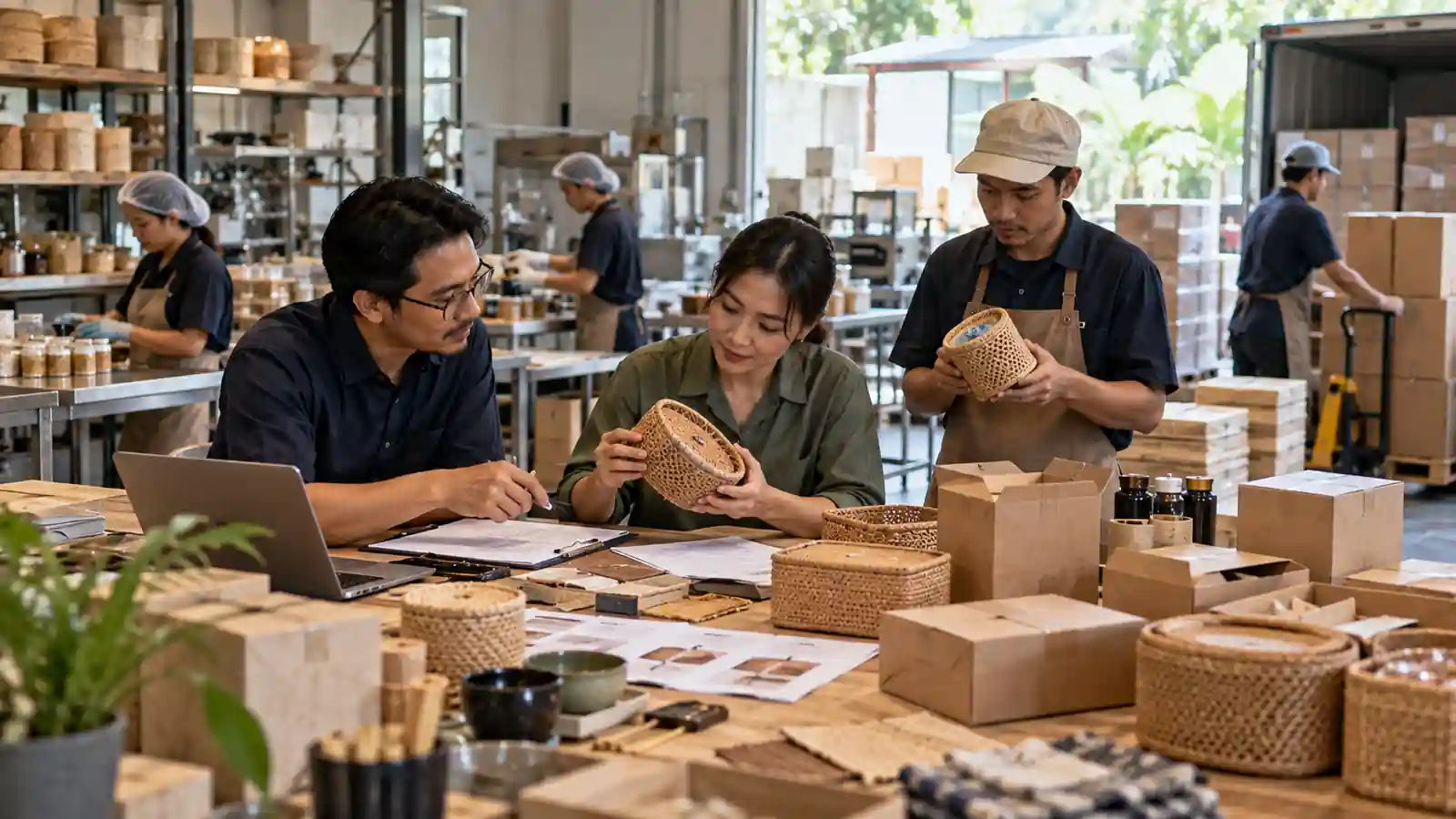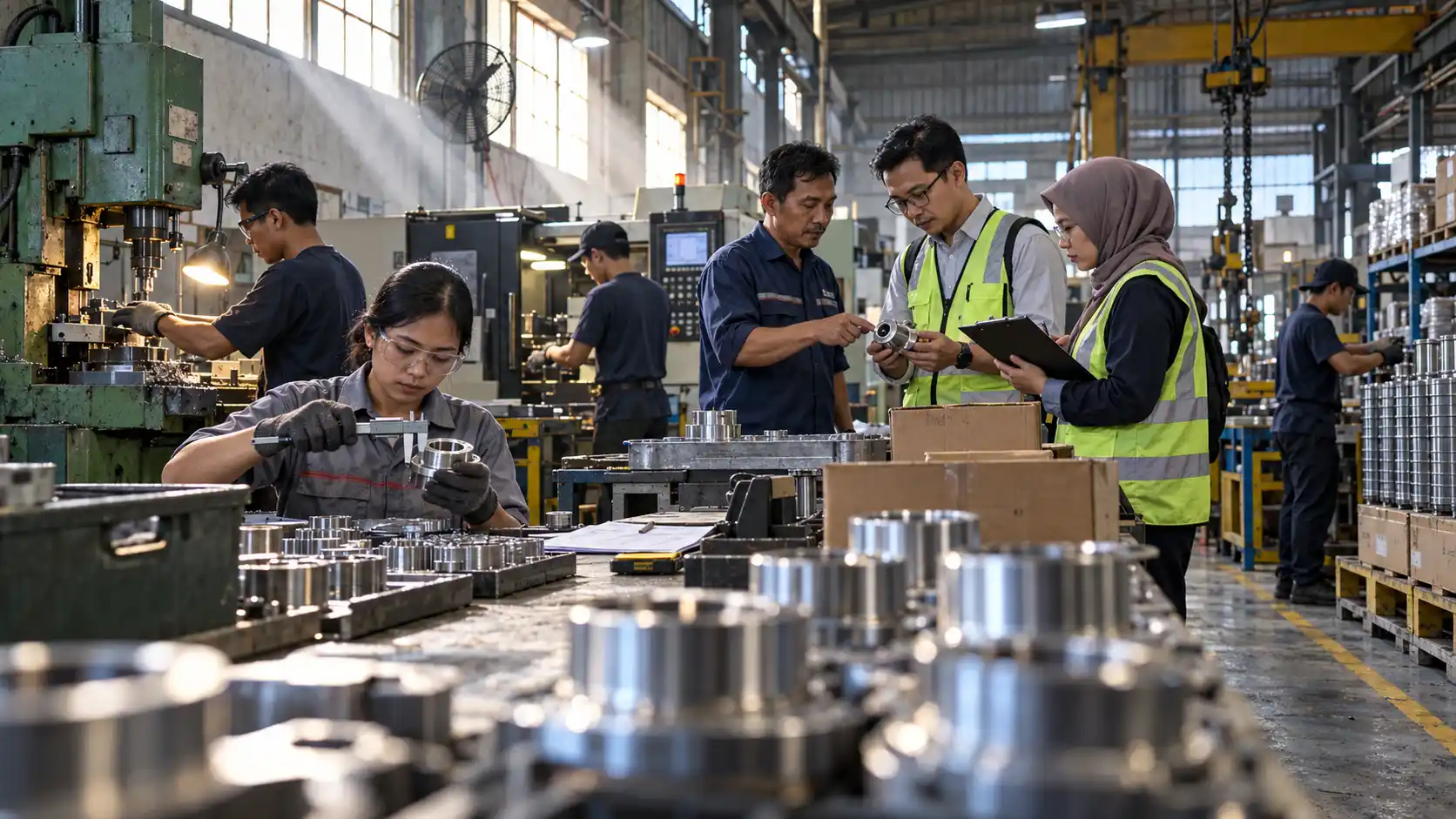

On 13 October 2026, Indonesia's Ministry of Industry again pushed small and medium industrial businesses to strengthen partnerships with larger companies. A programme involving MR.DIY Indonesia and CIMB Niaga went beyond market access to include financial readiness, sustainability, governance and preparation for increasingly demanding supply chains.
Behind that agenda is an important distinction.
Meeting a buyer does not make a company a supplier.
Business matching can open a conversation, reveal a sourcing requirement and even generate a request for samples. Corporate buyers, however, eventually need to answer a more consequential question: can this company supply consistently when a presentation becomes hundreds or thousands of transactions?
That is where supplier development actually begins.
Buyers Purchase More Than Products
In consumer markets, the final product can dominate the purchasing decision.
In B2B supply chains, buyers also purchase the organisational capability behind the product.
Indonesia's Ministry of Industry illustrates this clearly in its electric-vehicle supplier-development programme. Supplier assessment covers technology, quality, production capacity, engineering, certification, productivity, cost and delivery performance. Potential suppliers can then progress through prototype development, testing, certification, supplier assessment and qualification.
Two businesses can therefore produce equally impressive samples while representing very different sourcing risks.
One may be able to manufacture 100 excellent pieces for a presentation.
Another has process controls capable of keeping 10,000 pieces within specification.
For procurement, that distinction matters.
Business Matching Reduces an Information Gap
One purpose of business matching is to connect two organisations that previously knew little about each other.
A large buyer may not know that a domestic SME possesses a particular capability. The SME, meanwhile, may not understand the buyer's specification, volumes, procurement procedures, documentation or operating standards.
World Bank work on supplier development identifies this information asymmetry as a significant barrier between SMEs and larger buyers. Development programmes can clarify buyer requirements while helping signal supplier capabilities.
But after the information gap begins to close, evidence is still required.
That is why Ministry of Industry programmes for Indonesian metal SMEs have included direct factory visits. Prospective large-company partners examine production processes, quality, capacity and operational readiness rather than relying solely on a presentation.
A pitch explains what the company says it can do.
An assessment tests what the operating system can actually do.
Qualified Supplier Is an Operational Status
In its electric-motorcycle programme, the Ministry of Industry explicitly says success should not be measured merely by how many SMEs attend business matching. The objective is to create qualified suppliers that secure sustainable industrial orders.
That changes how market access should be understood.
The first objective is not collecting a procurement manager's business card.
It is closing the gap between the company's present capabilities and the buyer's requirements.
A buyer requiring precise dimensions needs evidence that machinery, measurement equipment, operators, inspection processes and corrective actions can repeatedly maintain tolerance.
A buyer requiring weekly deliveries needs confidence in capacity, scheduling, inventory and contingency planning.
A buyer requiring traceability needs suppliers to connect material, batches, processes and documentation.
The product is one layer.
The system producing it is another.
Low Price Does Not Replace Reliability
Cost remains important.
But a supplier that cannot meet specifications or delivery windows does not automatically become competitive by offering a lower unit price.
World Bank research on SME upgrading notes that in supplier-driven value chains, small businesses often need to demonstrate consistent production against exact buyer specifications and timing requirements before price competition becomes meaningful. Supplier performance over time also influences the depth and duration of the relationship.
UNIDO makes a similar distinction: matchmaking identifies buyers, benchmarking diagnoses capability gaps, and capacity building helps suppliers close those gaps.
Cheap but unreliable supply can create other costs: line stoppages, rejects, rework, emergency sourcing, customer complaints and lost sales.
Supplier value is therefore not merely unit price.
It combines cost with predictability.
A Larger Order Can Create a Financing Problem
Supplier development contains a paradox.
Winning a major order can be positive while simultaneously creating new financial pressure.
A supplier may need to purchase raw materials in advance, increase labour, hold more inventory, invest in tooling or certification, and then wait through the buyer's payment cycle.
This is one reason the October Ministry of Industry programme connects supplier readiness with finance and financial management rather than market access alone.
Indonesia's 2026 Vendor Development programme in food supply chains similarly connects integration with improvements in capacity, quality, financing, legal compliance, food safety and supply continuity.
A business can win the purchase order and still fail if it cannot finance delivery.
Financial capacity is therefore part of operational readiness.
The Purchase Order Is Not the Finish Line
Once a supplier qualifies and starts shipping, actual performance data begins accumulating.
How many defects appear?
How often is delivery late?
How quickly are complaints resolved?
Does capacity remain stable when volumes increase?
Can specification changes be implemented without disrupting quality?
Does the correct documentation consistently accompany shipments?
Those results influence whether the buyer increases, maintains, reduces or reallocates future volume.
Supplier qualification is therefore not a one-time examination.
It marks the beginning of a performance history.
From Meeting to Supply Relationship
As a GATICORP editorial framework:
Buyer Need → Capability Mapping → Supplier Assessment → Sample / Prototype → Testing → Qualification → Purchase Order → Supplier Performance
The precise sequence varies by company and industry, but the principle remains useful.
Market access gets a supplier considered.
Operational capability makes the buyer comfortable depending on it.
That leads to a better question for growing businesses.
Not only:
“How can we convince this buyer to try us?”
But:
“What must we prove before this buyer is willing to depend on us?”
A supplier becomes part of another company's operations.
If it fails, part of that failure travels upstream to the buyer.
Corporate procurement is therefore not simply buying products.
It is purchasing reliability.
Business matching opens the door.
Operational capability determines whether the relationship stays open.
- Indonesia Ministry of Industry, 13 October 2026 — Industrial Partnerships and Sustainable Financing for SMEs. Used for the current trigger on large-company partnerships, financial solutions, ESG readiness and supplier preparation.
- Indonesia Ministry of Industry, 18 August 2026 — SMEs Entering the Electric-Motorcycle Supply Chain. Primary reference for supplier assessment, prototypes, testing, qualification and sustainable orders.
- Indonesia Ministry of Industry, 17 July 2026 — Cassava Vendor Development. Used for the 2026 Vendor Development context covering capacity, quality, legal requirements, financing and supply consistency.
- Indonesia Ministry of Industry, 10 August 2026 — Metal SMEs and Large Manufacturers. Used for factory visits and direct assessment of process, quality and capacity.
- World Bank — SME Upgrading Programs. Used for supplier qualification, buyer specifications, timing and supplier performance.
- World Bank — Supplier Development and SME Capability Gaps. Used for buyer–supplier information asymmetry and capability strengthening.
- UNIDO — Supplier Development / SPX. Used for the distinction between matchmaking, benchmarking and capability development.
- Editorial note: procurement and supplier-qualification processes vary by sector, buyer, product and regulation. The framework used here is a GATICORP editorial model rather than a universal procurement standard.
Published: October 19, 2026