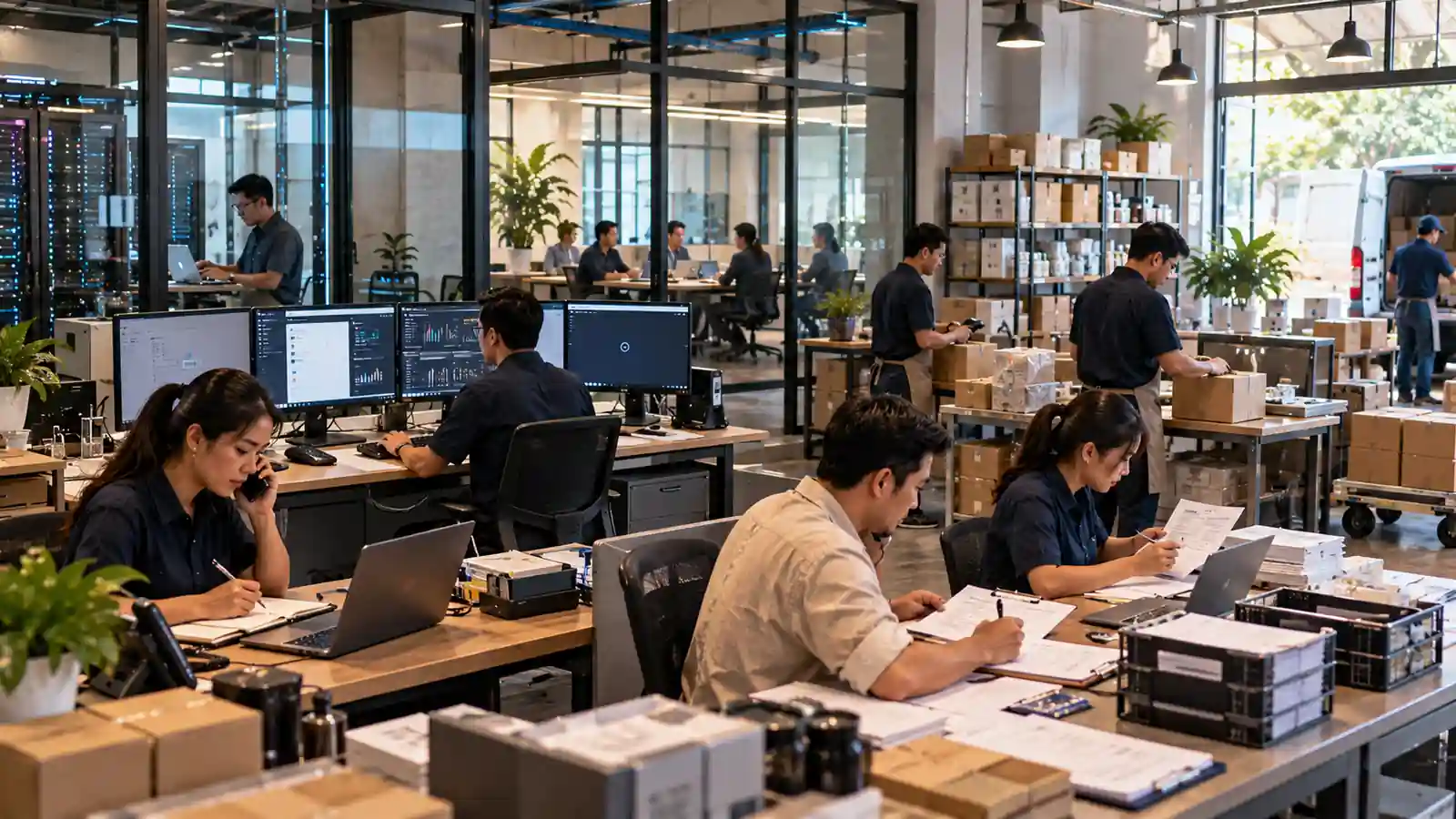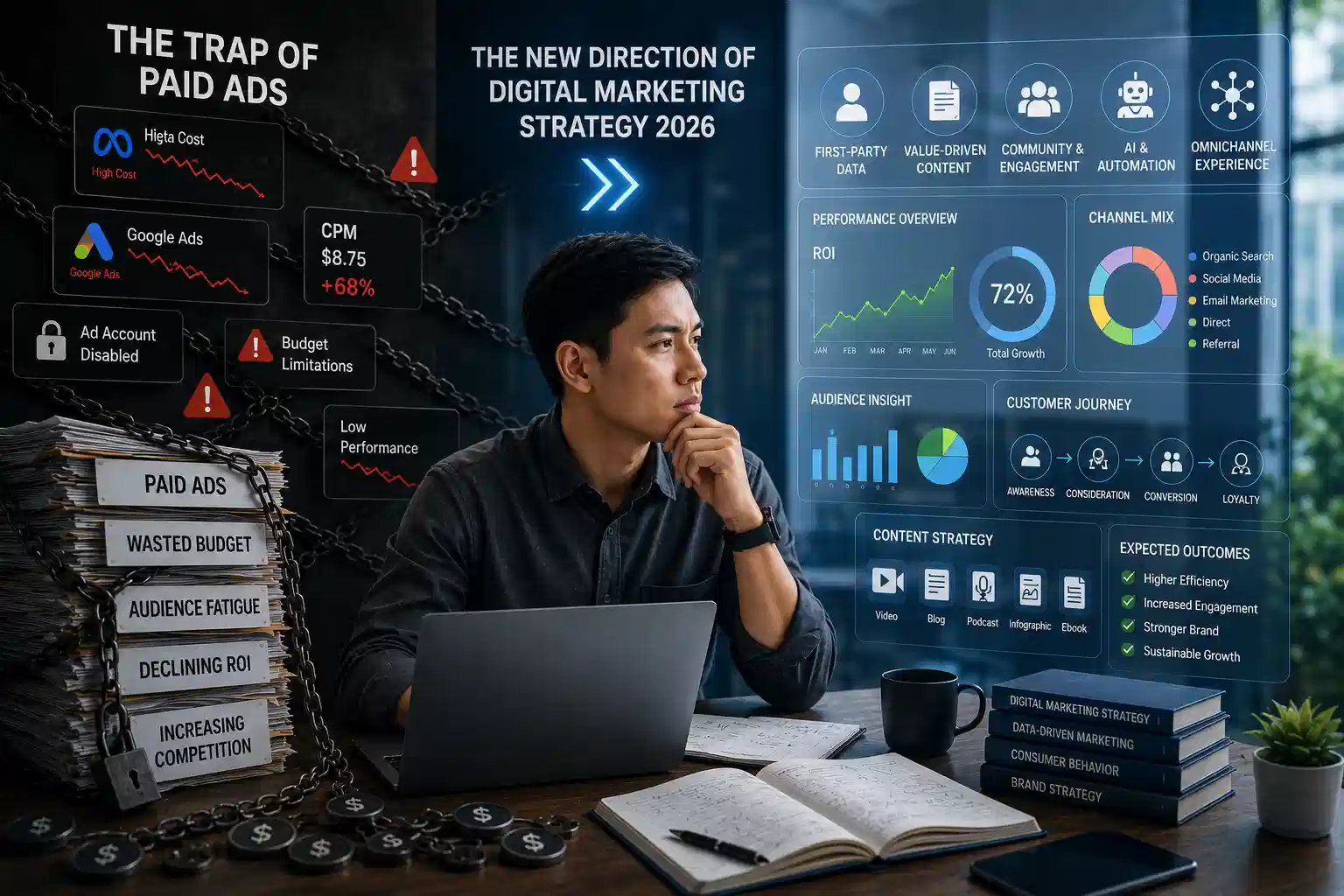

Riko stared blankly at his monitor, analyzing a customer acquisition chart that continuously trended upward, aggressively cannibalizing his product profit margins. The Bandung-based F&B entrepreneur had recently allocated nearly thirty million rupiahs to his latest digital campaign, yet his sales trajectory remained stagnant. This unsettling corporate reality reflects a silent crisis currently reshaping thousands of businesses across Indonesia mid-year.
Background: The Costly Illusion of Instant Results
For years, injecting capital into paid ad platforms represented the most reliable shortcut to scale online visibility and boost immediate sales volumes. This outdated framework operated on the assumption that scaling ad spend would naturally generate a proportional spike in consumer conversions. However, entering the second half of 2026, market saturation and aggressive platform algorithmic overhauls have rewritten the operational playbook entirely.
Relying exclusively on paid distribution channels without establishing a robust underlying data foundation has evolved into a high-risk liability. The moment the marketing budget dries up, consumer traffic drops to zero, leaving the organization without any sustainable digital infrastructure. Business leaders are forced to acknowledge that legacy approaches driven by assumptions or competitive imitation are no longer viable.
The Structural Shift: Dissecting Macro Marketing Data
Field developments are strongly corroborated by concrete, analytical parameters from recent cross-industry studies. According to the comprehensive Indonesia Digital Marketing Benchmark 2026 report published by Arfadia, an immense efficiency disparity exists between organic and paid customer acquisition channels.
The Cost per Acquisition (CPA) for paid search campaigns in Indonesia has scaled to an average of IDR 310,000 per consumer. Conversely, the Organic CPA remains controlled at approximately IDR 42.000, demonstrating a staggering 7.4x efficiency advantage.
This metric proves that burning corporate capital on paid platforms without creative efficiency yields diminishing returns. Simultaneously, how consumers gather product insights is undergoing a fundamental paradigm shift driven by artificial intelligence penetration. Based on the PwC Indonesia (2026) report, 69% of the national workforce actively incorporated generative AI into their operational ecosystems over the past year. Consequently, information discovery is transitioning from standard keyword searches to fluid, conversational interactions with advanced AI models, demanding total content adaptation.
Lessons & Relevance: Building Adaptive Ecosystems
The ultimate takeaway from this evolving digital landscape is the absolute necessity of data sovereignty and strict omnichannel consistency. Enterprises can no longer anchor their long-term survival to volatile third-party platforms; instead, they must aggressively optimize owned media infrastructures, including high-performance corporate portals, first-party consumer databases, and dedicated brand communities.
The Creative Studio and Digital Dev teams at PT Gati Eling Sembada (Gaticorp) view this market transition as a phenomenal strategic window. Merging authentic brand visual architectures with highly custom data tracking tools allows corporations to decipher consumer behaviors with absolute precision. By deploying real-time data streaming and analytics, a modern enterprise can deliver deeply hyper-personalized consumer experiences independent of mainstream social media network algorithms.
FAQ (Frequently Asked Questions)
- How is AI transforming digital marketing strategy 2026 in Indonesia? AI modifies the core mechanism of brand discovery. Modern search behavior is conversational, requiring enterprises to master Generative Engine Optimization (GEO) to guarantee their products are natively recommended by generative models.
- Why are paid acquisition costs (CPA) surging across Indonesian industries? The spike is driven by historical advertiser density on core networks like TikTok and Meta Ads, combined with global user-privacy regulations that minimize traditional tracking efficiency.
- What immediate steps should a brand take to strengthen organic marketing? Prioritize creating high-authority content assets (Content Authority) and capturing first-party database systems through structured consumer email lists, alongside adaptive search framework integration.
Conclusion — What is the Next Move?
Escaping the compounding costs of paid advertising traps requires the strategic audacisity to restructure your digital marketing model. Begin reallocating a percentage of transactional ad spends into engineering a sovereign, highly resilient digital ecosystem. By pairing disciplined visual communication strategies with enterprise-grade data tool implementations, your business will secure sustained growth within an unpredictable digital marketplace.
- Market Research Report: Indonesia Digital Marketing Benchmark 2026, Arfadia (Accessed June 2026).
- Data Publication: Global Workforce Hopes and Fears Survey 2025/2026, PwC Indonesia (Accessed June 2026).
- Industrial Synthesis: 10 Tren Digital Marketing Online 2026, Mekari Blog (Accessed June 2026).
Published: June 26, 2026