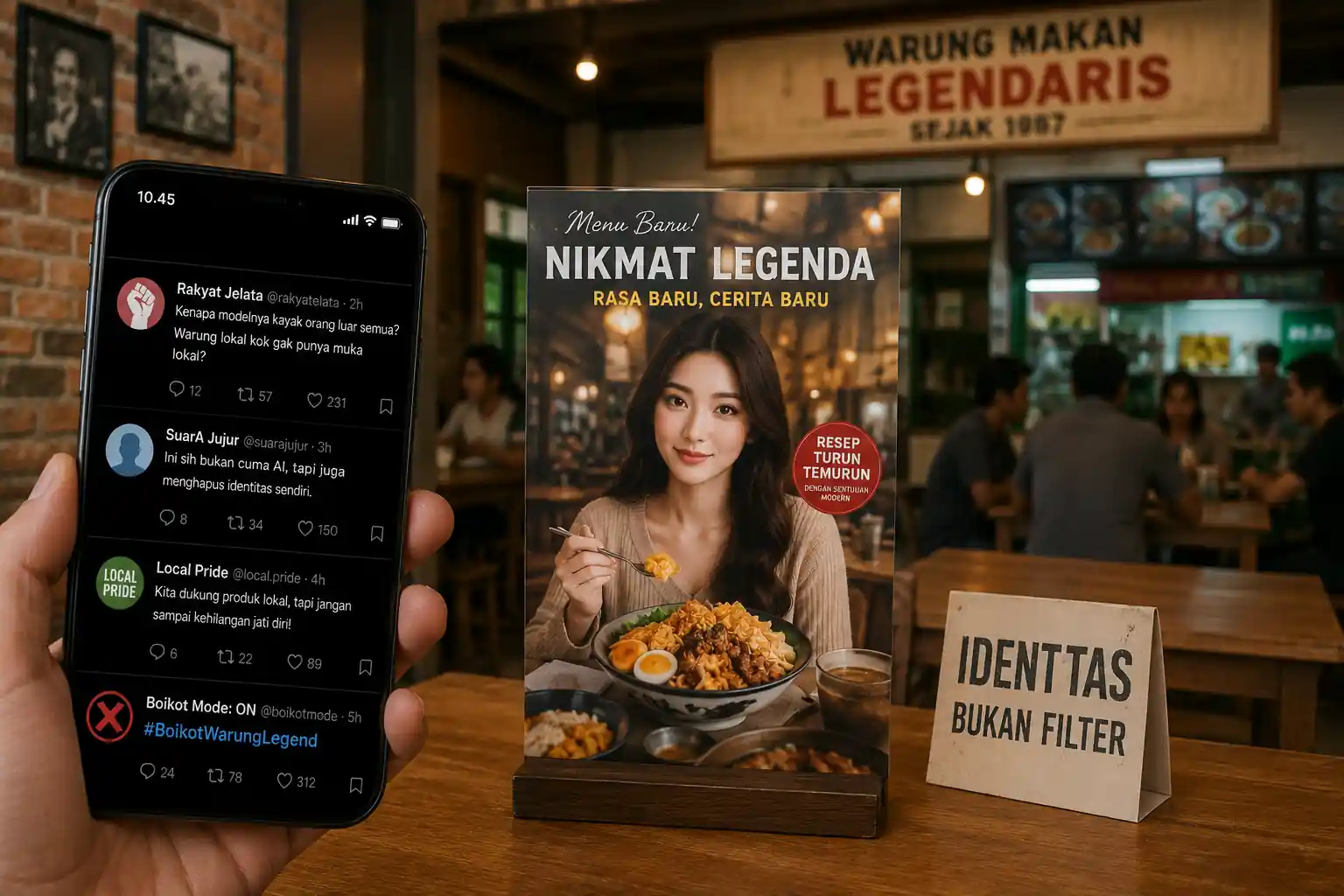

Picture a heritage food brand launching a campaign using synthetic digital models. The images look flawless—crystal-clear skin, sharp features, resembling international pop stars. Yet, the internet reacted with immediate backlash and online boycotts. This exact scenario hit a prominent local culinary establishment just days ago.
When Efficiency Breaks Consumer Trust
Cutting production costs through instant digital generators can easily backfire. Many entrepreneurs take this shortcut to bypass expensive photo sessions. They overlook that food is an emotional commodity deeply tied to cultural familiarity. Alien visual styles create an immediate emotional disconnect with local buyers.
A recent market report by Nielsen (2026) reveals that 58% of younger consumers in Southeast Asia prefer visual representations that mirror authentic local ethnic profiles. This metric underscores a vital truth. Modern customers seek self-reflection in the daily brands they choose to support.
Content automation tools are spreading faster than ever. An industry analysis by SWA (2025) highlighted a 42% surge in smart tech adoption across regional creative studios. However, this rapid shift has created a sea of monotonous, robotic marketing campaigns.
Sustaining Identity Amid Automation
Digital transformation is an inevitable reality. The answer lies not in rejecting new systems, but in steering them with solid branding rules. A robust AI content strategy must always remain anchored in local cultural realities.
Every generation prompt fed into image models requires precise localized parameters. Incorporate diverse skin tones and facial structures native to the archipelago. This simple adjustment ensures your marketing assets remain relatable.
Furthermore, seamless collaboration between human creators and digital assets is non-negotiable. Software should handle repetitive initial drafts. Meanwhile, final aesthetic choices must rest with local designers who understand consumer cultural nuances.
Modern Communication Tactics
The current food and beverage landscape demands operational speed without sacrificing visual integrity. Neglecting either element means risking obscurity in a highly competitive arena.
The core takeaway from this week's digital public relations crisis is clear. Brands need adaptive communication partners. Data-driven integration helps enterprises scale up fast while keeping the true essence of their brand intact.
FAQ
- How do we identify overly generic digital content? Look for abnormally smooth skin textures without pores and facial structures that look unnatural to the local demographic.
- Are virtual personas viable for smaller businesses? Yes, provided they are built around relatable stories rather than just chasing global aesthetic hype.
- How can we balance visual production costs with high quality? Adopt a hybrid method. Take genuine product photos manually, then use digital software strictly for background adjustments.
- Marketeers.com (June 24, 2026)
- SWA.co.id (June 22, 2026)
- Nielsen Indonesia Media Research (2026)
Published: June 28, 2026